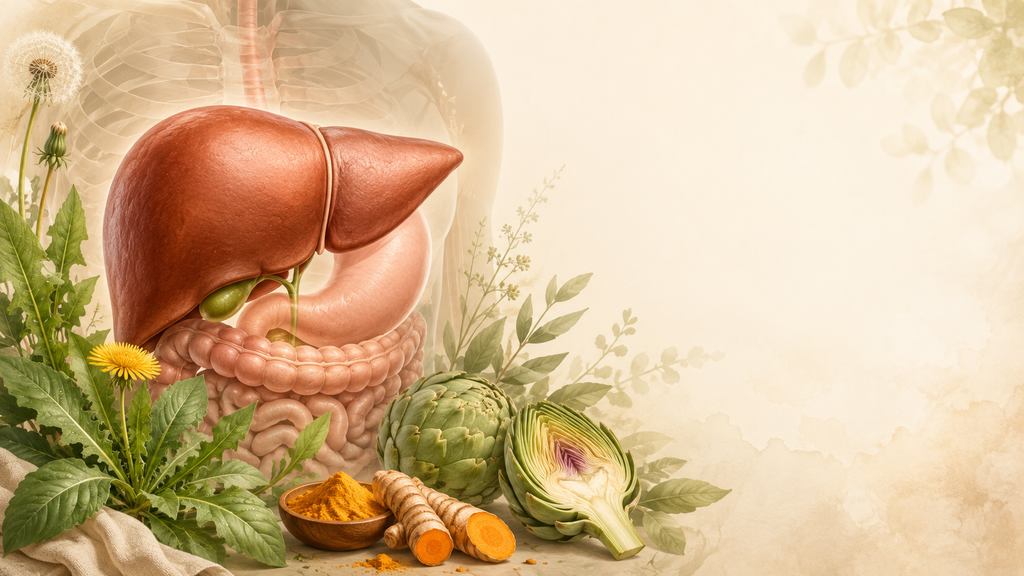
The liver is so important to survival that G-d gave the body the extraordinary ability to regenerate it.
That alone should tell us something about how valuable this organ is.
Yet most conversations about liver health reduce it to “detoxing,” when the liver is actually involved in hundreds of functions—from managing blood sugar and fats to making bile, processing hormones, storing nutrients, supporting immunity, and producing proteins the body cannot function without.
Before we can really understand how to support the liver, we first need to understand what this remarkable organ is, what it is made of, and what it is doing for us every day.
What Is the Liver Actually Made Of?
When we talk about the liver, we are not talking about one solid piece of tissue doing one job.
The liver is built from several different kinds of cells, blood vessels, bile channels, connective tissue, collagen, and other structural proteins that all work together.
Most of the liver is made up of specialized cells called hepatocytes.
These cells make up most of the organ’s working mass and carry out much of what we associate with liver function—processing nutrients, making proteins, storing energy, producing bile, handling fats, and changing substances the body needs to remove.
But hepatocytes are only part of the story.
The Framework Holding Everything Together
The liver has a delicate support system called the extracellular matrix.
That sounds technical, but it simply means the material surrounding and supporting the liver’s cells.
Think of it like the framework of a house. The cells are doing the work, but they still need structure around them to hold everything in place and allow them to function properly.
This framework contains several types of collagen, along with structural proteins such as fibronectin, laminin, and elastin.
Collagen is not only found in the skin and joints.
Different forms of collagen help support the liver’s cells, blood vessels, bile ducts, and internal structure.
A healthy liver does not contain large amounts of dense scar-like tissue. Its supporting framework is relatively delicate, which allows substances in the blood to move easily toward the liver cells that need to process them.
A Huge Network of Tiny Blood Channels
The liver is filled with tiny blood channels called sinusoids.
These are not quite like ordinary blood vessels.
They are designed so blood can flow extremely close to the liver cells.
Their walls allow nutrients, hormones, medications, waste products, and other substances to move between the bloodstream and the hepatocytes.
That close contact is one of the reasons the liver can process so much of what enters the blood.
Immune Defense Is Built Right Into the Organ
Inside those tiny blood channels are immune cells called Kupffer cells.
They help identify and remove bacteria, damaged cells, and other unwanted material.
That means part of the liver’s physical structure is actually devoted to immune defense.
It is not simply processing nutrients.
It is also constantly monitoring what is passing through the blood.
Cells That Store Nutrients — And Help Form Scar Tissue
Another important type of cell is the stellate cell.
When the liver is healthy, stellate cells help maintain its internal structure and serve as an important storage site for vitamin A.
But these same cells become especially important when the liver is repeatedly injured.
When damage continues over time, stellate cells can become activated and begin producing much larger amounts of collagen.
That extra collagen can build up as scar tissue.
This process is called fibrosis.
So collagen itself is not the problem.
The liver needs collagen for normal structure.
The problem develops when ongoing injury causes too much of it to be laid down.
A Separate Highway for Bile
The liver also contains an entire system devoted to moving bile.
Special cells called cholangiocytes line the bile ducts.
These ducts branch throughout the liver and collect the bile being produced by liver cells.
The bile then moves through this network toward the digestive system.
So while blood is moving through one network, bile is being collected and carried through another.
Both systems are operating inside the same organ at the same time.
Millions of Tiny Working Units
All of these cells, blood channels, bile pathways, and supporting tissues are organized into microscopic working units called lobules.
You can picture each lobule as a tiny working neighborhood.
Liver cells are arranged around a small central blood vessel.
Blood moves through tiny sinusoids between those cells.
Bile moves through its own tiny channels.
Around the outer edges are branches of blood vessels and bile ducts bringing things in and carrying things out.
Millions of these microscopic units working together create what we simply call the liver.
Its structure is not random.
The liver is built so blood, nutrients, oxygen, hormones, medications, waste products, and other substances can come into very close contact with the cells responsible for processing them.
Once you understand what the liver is actually made of, the hundreds of jobs it performs begin to make much more sense.
Built to Repair
One of the most remarkable things about the liver is its ability to regenerate.
If part of healthy liver tissue is lost, the remaining liver cells can multiply and restore much of the liver’s mass.
But regeneration does not mean the liver is impossible to damage.
It absolutely can be damaged.
When injury continues over a long period of time, healthy tissue can gradually be replaced by scar tissue.
So the liver’s ability to recover should not be taken as permission to constantly overload it.
Its resilience is remarkable, but it still needs support.
From Your Intestines Straight to Your Liver
After you eat, your digestive system breaks food down into smaller nutrients that can be absorbed.
Much of the nutrient-rich blood coming from the intestines travels directly to the liver.
That means the liver gets an early look at much of what you have absorbed.
It processes those nutrients according to what the body needs.
Some may be used right away.
Some may be changed into another form.
Some may be stored for later.
Some may be sent back into circulation.
Others may need to be prepared for removal.
This is one reason liver health and digestive health are so closely connected.
What happens in the digestive system directly affects what reaches the liver next.
Keeping Blood Sugar Steady
One of the liver’s major jobs is helping keep blood sugar stable.
After you eat carbohydrates, some of the glucose entering the bloodstream can be stored inside the liver.
The liver stores some of it as glycogen.
Glycogen gives the body a reserve of fuel it can draw from later.
When several hours have passed since you last ate and blood sugar begins to fall, the liver can release glucose back into the bloodstream.
If necessary, it can even make new glucose from other materials.
So while you are eating, between meals, and even while you sleep, the liver is helping manage your fuel supply.
Managing Fat and Energy
The liver also plays a major role in how the body handles fat.
It processes fatty acids, helps package fats for transport, and helps control whether certain fats are stored, transported, or used for energy.
When carbohydrate availability is low, the liver can also make another type of fuel called ketones.
But there is a limit to how much fat the liver can comfortably handle.
If more fat is arriving or being produced than it can properly process, fat can begin accumulating inside liver cells.
This is one reason liver health and metabolic health are so closely connected.
Why the Body Makes Cholesterol
Cholesterol is often talked about as though the body would be healthier without it.
But we actually need cholesterol.
The liver makes cholesterol because the body uses it for important jobs.
Cholesterol helps:
- Build cell membranes
- Make certain hormones
- Make bile acids
- Support vitamin D production
The goal is not to eliminate cholesterol.
The body needs healthy production, transport, and balance.
What Happens to the Protein You Eat?
When you eat protein, digestion breaks it down into smaller pieces called amino acids.
Amino acids are building materials.
The body uses them to make muscles, enzymes, hormones, tissues, and many other substances.
The liver helps process and manage these amino acids.
But protein metabolism also creates ammonia.
Too much ammonia can be harmful.
The liver changes ammonia into another substance called urea, which can then travel to the kidneys and leave the body through urine.
The liver handles one part of the process, and the kidneys complete another.
Making Proteins the Body Cannot Do Without
The liver does not only process protein from food.
It also makes important proteins itself.
One of them is albumin.
Albumin helps keep fluid inside the bloodstream and carries different substances through the body.
The liver also makes several proteins needed for normal blood clotting.
So liver function reaches far beyond digestion.
It also affects circulation, fluid balance, and the body’s ability to respond when bleeding occurs.
Bile: Much More Important Than Most People Realize
The liver makes bile every day.
Bile helps the body digest and absorb fat.
It is also necessary for properly absorbing the fat-soluble vitamins:
A, D, E, and K.
Bile also carries certain waste products from the liver into the digestive tract.
So bile is not simply a digestive fluid.
It is also part of the way the liver connects digestion with elimination.
What Happens to Old Red Blood Cells?
Red blood cells do not live forever.
When old red blood cells are broken down, one of the substances created is called bilirubin.
The liver processes bilirubin so the body can eventually remove it.
If bilirubin begins building up, it can cause yellowing of the skin or eyes.
That is one reason yellowing of the skin or eyes should never be ignored.
A Storage Room for Important Nutrients
The liver also stores nutrients and other substances the body may need later.
These include:
- Vitamin A
- Vitamin B12
- Iron
- Copper
- Glycogen
This gives the body reserves to draw from instead of depending only on what was eaten that day.
But storing nutrients is still only one part of its work.
The liver is also constantly dealing with chemical messages, immune activity, and substances that need to be changed or removed.
Hormones Eventually Have to Go Somewhere
Hormones do not simply circulate through the body forever.
Eventually, they need to be changed, broken down, or removed.
The liver helps process several types of hormones, including:
- Sex hormones such as estrogen
- Thyroid hormones
- Stress hormones
- Hormones involved in blood sugar regulation
The liver also participates in changing thyroid hormone into forms the body can use.
This is why I do not look at liver health, hormone health, digestive health, and metabolic health as completely separate issues.
One system can affect another.
An Organ With Its Own Immune Defense
The liver is also part of the immune system.
Because blood from the intestines travels directly to the liver, the liver is constantly exposed to nutrients, bacterial materials, and many other substances coming from the digestive tract.
The immune cells we talked about earlier help inspect what is passing through.
They help identify what is harmless and what may require an immune response.
The liver also produces proteins involved in inflammation and immune activity.
So immunity is not something separate from liver function.
It is built directly into it.
What “Detoxification” Actually Means
This is the part most people already associate with the liver.
But detoxification does not mean the liver simply catches toxins like a filter.
The process is much more complex.
The liver uses enzymes to chemically change substances such as:
- Medications
- Alcohol
- Hormones
- Environmental chemicals
- Waste products made inside the body
Some substances need to be changed several times before the body can safely remove them.
The liver helps change them into forms that can eventually leave through bile, urine, or stool.
And this is where something very important often gets overlooked:
The liver needs nutrients to perform these chemical reactions.
The body still needs the materials to do the work.
What Can Damage the Liver?
The liver is remarkably resilient, but resilient does not mean indestructible.
Damage often develops when the liver is repeatedly exposed to something that causes injury, inflammation, or more metabolic work than it can comfortably handle.
Too Much Fat Building Up Inside Liver Cells
Fat can accumulate inside the liver when the body is producing, storing, or sending more fat to the liver than it can properly handle.
This is commonly connected to things such as:
- Insulin resistance
- High blood sugar
- Excess intake of refined carbohydrates and added sugars
- Excess calorie intake over time
- Low physical activity
- Certain metabolic conditions
Someone does not have to drink alcohol to develop a fatty liver.
That is an important distinction.
Alcohol
The liver has to break alcohol down.
During that process, substances are created that can damage liver cells and increase oxidative stress and inflammation.
Repeated exposure can eventually contribute to fat accumulation, inflammation, scarring, and more serious liver damage.
Medications
Medications are absolutely part of the liver-health conversation.
The liver is one of the main organs involved in processing many medications, which means everything a person takes needs to be considered when looking at what the liver is being asked to handle.
Some medications have a well-established ability to cause liver injury.
With others, injury may happen only in certain people or under certain circumstances.
Dose, length of use, genetics, existing liver health, alcohol use, nutritional status, other medications, and interactions can all affect risk.
This includes prescription medications and over-the-counter medications.
Acetaminophen is one of the best-known examples because excessive amounts can cause severe liver injury, but it is far from the only medication that can affect the liver.
And sometimes the issue is not one medication by itself.
Several medications, herbs, or supplements may be using the same liver pathways at the same time.
One substance may change how quickly another is broken down, which can change how much remains in circulation.
That is why I consider a complete medication and supplement history an important part of understanding liver health.
It does not mean someone should suddenly stop a medication they need.
It means medications should never be left out of the conversation simply because they were prescribed or purchased over the counter.
Herbs and Supplements
“Natural” does not automatically mean harmless.
Herbs and supplements also contain active compounds the body has to process.
Some herbs can interact with medications, and certain herbs or concentrated extracts have been linked to liver injury when used improperly or in the wrong person.
This is one reason I do not believe in randomly combining multiple detox products, teas, capsules, tinctures, and supplements just because each one is marketed as “natural.”
Viral Infections
Certain viruses can directly infect and damage liver cells.
Hepatitis viruses are among the best-known examples.
Some infections may be temporary, while others can become chronic and continue damaging the liver over many years.
Environmental and Chemical Exposures
The liver also helps process many substances we encounter in the environment.
Repeated or high-level exposure to certain solvents, chemicals, pesticides, and toxins can increase the burden on liver-processing systems and, depending on the substance, may directly injure liver tissue.
Too Much Iron or Copper
The liver stores minerals such as iron and copper.
The body needs both.
But when certain medical conditions cause too much iron or copper to accumulate, those minerals can begin damaging liver cells instead of supporting normal function.
This is another example of why more is not always better when it comes to supplements.
Problems With Bile Flow
The liver may be making bile, but that bile still has to move properly.
Gallstones, narrowing or blockage of the bile ducts, inflammation, and other problems can interfere with bile flow.
When bile cannot move properly, substances that should be moving out can begin building up.
Ongoing Inflammation and Repeated Injury
This brings us back to the collagen and stellate cells we discussed earlier.
When liver cells are repeatedly injured, the body attempts to repair the damage.
Stellate cells can become activated and begin laying down more collagen.
At first, this is part of the repair response.
But when injury continues, more and more scar tissue can build up.
That is fibrosis.
If that scarring becomes severe and widespread, it can progress to cirrhosis, where the normal structure of the liver becomes permanently altered and its ability to function can decline.
This is why prevention matters.
The goal is not to wait until the liver is struggling and then search for a cleanse.
The better approach is to understand what creates unnecessary stress on the liver, reduce those burdens where possible, and make sure the body has what it needs to maintain healthy liver function.
What Does the Liver Need to Perform Well?
Once we understand what can damage the liver, simply saying “eat healthy” is not enough.
The liver is a working organ made of living cells.
Those cells are constantly building proteins, making bile, producing energy, repairing themselves, moving fats, changing hormones, and processing substances for removal.
All of that requires actual raw materials.
So when I talk about supporting the liver, this is what I mean.
Amino Acids: Raw Materials the Liver Uses Every Day
Protein is not important simply because it helps build muscle.
When protein is digested, it is broken down into amino acids, and the liver uses those amino acids for many different jobs.
Some are used to build proteins.
Some can be converted into energy.
Some are used to make other compounds the liver needs.
And several are directly involved in the liver’s own protective systems.
One of the best examples is glutathione.
Glutathione is one of the liver’s major antioxidant and protective compounds.
But the body does not make glutathione out of nothing.
It builds it from three amino acids:
- Cysteine
- Glycine
- Glutamate
Of those, cysteine is especially important because the amount available can affect how much glutathione the body is able to make.
The liver can also make cysteine from another amino acid called methionine.
This is why adequate protein is much more than a fitness conversation.
These amino acids are part of the liver’s working materials.
Glutathione Is Doing More Than Fighting Oxidative Stress
Glutathione is often described simply as an antioxidant, but its role in the liver goes further than that.
The liver can attach glutathione to certain compounds as part of the process of changing them into forms that are easier for the body to handle and remove.
This is part of what is called conjugation.
The word sounds technical, but the idea is simple.
The liver can take a substance, change it, attach another molecule to it, and make it easier to move toward elimination.
Glutathione is one of the substances the liver can use for this purpose.
And making glutathione requires both amino acids and energy.
So when someone talks about detoxification without talking about nourishment, an important part of the process is being left out.
Bile Needs Building Blocks Too
We already talked about how important bile is for fat digestion, vitamin absorption, and carrying certain waste products away from the liver.
But bile has to be made.
The liver uses cholesterol to make bile acids.
Those bile acids can then be joined with amino acids such as glycine and taurine before being secreted into bile.
Bile also contains substances called phospholipids.
One especially important phospholipid is phosphatidylcholine.
And that brings us to choline.
Choline Helps the Liver Move Fat
Choline helps the body make phosphatidylcholine.
Phosphatidylcholine is important for healthy cell membranes, bile, and the liver’s ability to package and transport fat.
When choline intake is too low, fat can accumulate in the liver more easily.
So choline is not just another nutrient on a vitamin list.
It is part of the machinery the liver uses to handle fat.
Eggs are one of the richest food sources of choline, but it can also be found in meat, fish, legumes, and other foods.
The Liver Needs Energy to Do Its Work
The liver is one of the most metabolically active organs in the body.
Its cells need a steady supply of usable energy to carry out their work.
That cellular energy is known as ATP.
ATP powers countless reactions happening inside liver cells.
Even making glutathione requires energy.
The liver is able to work with different fuel sources.
It can use fatty acids.
It can work with glucose.
It can store glucose as glycogen.
It can make new glucose when needed.
And it can make ketones from fat when conditions call for it.
This is why liver health is not simply about cutting one nutrient out.
The liver needs enough nourishment to do its work while also not being continually overwhelmed with more energy than the body can use.
Vitamins and Minerals Help the Reactions Happen
Amino acids provide raw materials, but many liver enzymes need vitamins and minerals to function properly.
B vitamins take part in reactions involving energy production and amino-acid metabolism.
Magnesium is involved in many reactions that use ATP.
Selenium is needed to make antioxidant enzymes that work alongside glutathione.
Zinc participates in many enzyme systems and in normal cellular repair.
The important point is not that everyone should start taking high doses of these nutrients.
It is that the liver depends on nutrient sufficiency.
Too little matters.
But too much can matter too.
The liver stores nutrients such as iron and copper, and excessive amounts can become damaging.
So the goal is not:
“Take more supplements.”
The better question is:
“Does this person have enough of what the liver requires without unnecessarily overloading it?”
Healthy Cell Membranes Matter
Every hepatocyte is surrounded by a cell membrane.
Those membranes are built largely from fats called phospholipids.
One of the important ones, again, is phosphatidylcholine.
Cell membranes matter because liver cells constantly need to move nutrients and other substances in and out, communicate with neighboring cells, release bile components, and transport compounds they have processed.
So dietary fat is not simply something the liver has to deal with.
The body also uses appropriate fats as structural material.
The question is not simply whether someone eats fat.
The type, amount, and overall metabolic environment matter.
Antioxidant Protection Requires a Network
The liver is constantly carrying out chemical reactions.
Some of those reactions naturally create unstable compounds that can damage cells if they are not controlled.
The body therefore uses several antioxidant systems at the same time.
Glutathione is one.
Selenium-dependent enzymes are another part of that network.
Nutrients obtained from food and natural compounds found in plants also contribute to the larger antioxidant environment.
This is one reason I value a nutrient-dense diet containing vegetables, fruits, herbs, spices, quality proteins, and whole-food fats rather than trying to identify one “liver superfood.”
The liver does not run on one nutrient.
It runs on a network.
The Liver Needs a Way Out
Supporting the liver does not end when the liver processes something.
The body still has to remove it.
Some compounds leave through bile and enter the intestines.
Others return to the bloodstream and can eventually be handled by the kidneys.
That means bowel function and hydration matter.
If someone is regularly constipated, that becomes part of the liver-health conversation.
If hydration is poor, that matters too.
The liver, intestines, kidneys, and circulation are working together as part of the same larger process.
Blood Sugar and Insulin Matter More Than Most People Realize
Because the liver stores glucose, releases glucose, makes new glucose, processes fatty acids, and helps regulate energy use, blood-sugar health has a direct relationship with liver health.
When insulin resistance develops, the signals controlling glucose and fat metabolism begin to change.
More fat can be produced and stored in the liver.
This is one of the reasons metabolic dysfunction and fatty liver are so closely connected.
So for one person, “supporting the liver” may have much more to do with improving blood-sugar regulation than adding another herb.
Movement Changes What the Liver Has to Handle
Movement gives the body somewhere to use glucose and fatty acids for energy.
Active muscles can improve insulin sensitivity and increase the body’s demand for fuel.
That changes the metabolic environment the liver is working in.
This is why movement is not simply another healthy-lifestyle suggestion.
It directly influences several of the systems the liver is trying to regulate.
Sleep and Recovery Matter Too
Poor sleep can affect insulin sensitivity, hunger signals, stress hormones, inflammation, and the way the body handles energy.
Those changes eventually affect the liver too.
So if someone is eating well but consistently sleeping only a few hours a night, that information matters.
Once again, we cannot isolate the liver from the rest of the person.
This Is What I Mean by Liver Support
Supporting the liver is not simply:
“Take milk thistle.”
It means asking whether the liver has what it needs to:
- Build and repair its cells
- Make glutathione
- Produce and move bile
- Package and transport fats
- Maintain healthy cell membranes
- Produce cellular energy
- Carry out enzyme reactions
- Process hormones
- Handle medications and other compounds
- Manage oxidative stress
- Maintain healthy blood-sugar metabolism
- Move processed waste toward elimination
That is a much bigger conversation than a detox tea.
And once we understand those building blocks, then we can have a meaningful conversation about where herbs may fit.
So Where Do Herbs Fit?
Herbs can absolutely play an important role in liver support.
But I think the phrase “good for the liver” is far too vague.
Different herbs do different things.
Some are traditionally used to support bile flow.
Some are digestive bitters.
Some contain compounds that support antioxidant defenses.
Others have traditionally been used as nourishing liver herbs.
Herbs such as:
- Milk thistle
- Dandelion root
- Artichoke
- Turmeric
- Burdock
- Schisandra
may all come up when discussing liver support.
But that does not mean every person needs all of them.
And it certainly does not mean the same herb is appropriate for every situation.
The better question is not:
“What is the best herb for the liver?”
The better question is:
“What does this person’s body actually need support with?”
Why One Liver Protocol Cannot Fit Everyone
Imagine several people all saying:
“I want to support my liver.”
One may not be getting enough of the nutrients needed to build glutathione and repair tissue.
Another may already eat very well but take several medications that the liver has to process.
Another may be dealing with poor digestion and constipation.
Another may have blood-sugar or insulin concerns.
Another may have issues involving bile or the gallbladder.
Another may already be taking several herbs and supplements that overlap.
They all came in asking about liver support.
But they may not need the same thing.
This is why I do not start with a bottle.
I start with the person.
So What Does Your Body Need?
Learning how the liver works is an important first step.
But knowing that amino acids help build glutathione, choline helps the liver transport fat, bile needs its own building materials, bowel function affects elimination, or certain herbs have traditionally been used for liver support still does not tell you exactly what your body needs.
Your health history matters.
Your diet matters.
Your digestion matters.
Your bowel habits matter.
Your medications matter.
Your supplements matter.
Your blood sugar and metabolic health matter.
Your sleep matters.
And the symptoms that brought you to the conversation matter.
That is where individualized support becomes valuable.
During a Whole-Person Consultation, I do not look at one symptom or one organ by itself.
I look at the larger picture.
We look at nutrition, digestion, lifestyle, medications, supplements, health history, and how different systems may be influencing one another.
Because when an organ performs hundreds of jobs and works with nearly every major system in the body, supporting it should be thoughtful and individualized too.
If you want help understanding what may be placing the greatest demand on your body and which areas may need the most support, you can book a Whole-Person Consultation with Lael Herbal Home.
This article is for educational purposes only and is not intended to diagnose, treat, cure, or prevent disease. If you have known liver disease, abnormal liver testing, yellowing of the skin or eyes, severe abdominal pain, or other concerning symptoms, seek appropriate medical evaluation.