
Some herbs draw attention with brilliant colors, large blossoms, or sweet fragrances. Yarrow does not.
It grows quietly through fields, along roadsides, and across open land. Its tiny white flowers can easily disappear into the landscape. Yet this unassuming plant has been valued for generations for cleansing wounds, slowing bleeding, calming irritated tissue, and helping defend damaged skin from bacteria and fungi.
Yarrow, botanically known as Achillea millefolium, is a beautiful example of how the Creator can place remarkable strength inside something that appears so ordinary.
But before exploring what gives yarrow its strength, we must first understand how to identify it. Several plants produce similar-looking white flowers—and some are extremely poisonous.
How to Recognize Yarrow
Yarrow belongs to the Asteraceae, or daisy, family. It commonly grows between one and three feet tall and often spreads into patches through underground rhizomes.
Its botanical name offers the first identification clue. Millefolium means “a thousand leaves,” describing the many tiny divisions that create its soft, featherlike foliage.
Look for these features together:
- Feathery leaves: Narrow leaves divided into many fine, fernlike sections.
- Flat flower clusters: Numerous small blossoms gathered into a dense, relatively level surface at the top of the plant.
- Tiny individual flower heads: Each cluster contains miniature flowers with short white petals and pale centers.
- Green, lightly textured stems: Yarrow does not have the smooth, purple-blotched stems associated with poison hemlock.
- A woody herbal aroma: Properly identified yarrow carries a distinct earthy, medicinal scent.
- Patch-forming growth: Several stems often grow together because the plant spreads beneath the soil.
Its flowers are usually white or cream, although some varieties may bloom in shades of pink.
Never identify yarrow by its flowers alone. The leaves, stems, flower structure, height, scent, and growth pattern must all agree.
Distinguishing Yarrow From Poisonous Look-Alikes
The most serious identification risk is poison hemlock, or Conium maculatum. It is highly toxic and must never be tasted, harvested, or used medicinally.
Yarrow vs. Poison Hemlock
Flower formation:
Yarrow produces compact, flat-topped clusters. Poison hemlock forms umbrella-shaped clusters, with flower stalks extending from a central point like spokes.
Leaves:
Yarrow’s leaves are narrow and finely feathered. Poison hemlock has broader, triangular foliage resembling parsley.
Height:
Yarrow usually stands one to three feet tall. Mature poison hemlock commonly reaches three to six feet and may grow taller.
Stems:
Poison hemlock has smooth, hollow stems marked with reddish-purple spots or blotches. Yarrow lacks those characteristic markings.
Overall structure:
Yarrow generally appears compact and delicate. Poison hemlock becomes large, highly branched, and imposing as it matures.
Other possible look-alikes include Queen Anne’s lace, wild chervil, and water hemlock. Queen Anne’s lace has hairy stems and umbrella-shaped flowers. Wild chervil also forms umbels and has grooved, hairy stems. Water hemlock is extremely poisonous and commonly grows around wet soil, streambanks, and marshy areas.
Do not crush an unknown plant to check its scent because toxic plant sap may irritate the skin. If every identifying feature does not match, leave the plant alone. An identification app or photograph should never be the only confirmation used before harvesting a wild herb.
What Gives Yarrow Its Antibacterial and Antifungal Character?
Yarrow does not depend upon a single active compound. It contains several families of constituents, with each contributing something different to the plant’s overall action.
Flavonoids Interfere With Microbial Function
Yarrow contains flavonoids such as apigenin, luteolin, rutin, quercetin, and naringenin.
Microorganisms rely on specialized proteins and enzymes to reproduce, process nutrients, and maintain their internal systems. Certain flavonoids can interfere with those functions, making it more difficult for bacteria and fungi to grow normally.
This gives flavonoids a different role from simply damaging the outside of the cell: they interfere with the machinery the organism needs to continue operating.
Phenolic Acids Create an Unfavorable Environment
Yarrow contains chlorogenic, caffeic, salicylic, ferulic, and p-coumaric acids.
These compounds can alter the conditions surrounding microorganisms and interfere with their access to essential nutrients. Some phenolic acids can also bind with substances microbes need to remain active.
Their role is less like striking the organism directly and more like changing the environment it depends upon.
Tannins Bind With Proteins
Tannins are responsible for much of yarrow’s astringent, tightening quality.
They naturally bind with proteins. On the skin, this action helps explain yarrow’s traditional relationship with toning tissue and slowing minor bleeding.
When tannins encounter microorganisms, they may attach to proteins on the cell’s surface. This can interfere with the organism’s ability to attach, feed, and function properly.
Aromatic Terpenes Challenge the Protective Membrane
Yarrow’s naturally woody aroma comes partly from volatile terpenes. Depending on the plant’s chemotype and growing conditions, these may include camphor, 1,8-cineole, borneol, sabinene, pinene, germacrene-D, and nerolidol.
A bacterial or fungal cell depends upon its outer membrane to control what enters and leaves. Many aromatic terpenes are attracted to the fatty material within that membrane. When they enter and disturb its structure, the cell can begin losing the carefully controlled balance required for survival.
This helps explain why yarrow’s aromatic portion is so important to its antimicrobial reputation.
Sesquiterpene Lactones Support the Plant’s Defensive Action
Sesquiterpene lactones are protective compounds found throughout the Achillea genus.
These constituents are studied for their antimicrobial and inflammation-calming properties. Within the plant, they form part of yarrow’s own natural defense system. In herbal preparations, they contribute another layer of activity alongside the flavonoids, phenolic acids, tannins, and terpenes.
They can also trigger sensitivity in susceptible people. Anyone allergic to yarrow or other members of the Asteraceae family—including ragweed, chamomile, chrysanthemums, or marigolds—should avoid using it.
Why Extraction Matters
The beneficial compounds are already inside the herb, but they do not all dissolve into the same type of liquid.
Extraction does not create an herb’s properties. It determines which of its existing constituents become available in the finished preparation.
Water draws out many water-soluble compounds exceptionally well, including certain tannins, plant acids, and minerals. Oil is better suited to many fat-soluble constituents. Alcohol can reach across both sides, drawing out water-soluble compounds while also accessing a wider portion of the plant’s aromatic and moderately oil-soluble chemistry.
Think of the plant as a room with several locked doors. Water opens some. Oil opens others. Alcohol carries a broader set of keys.
This is why the same herb prepared as a tea, oil, or tincture will not produce an identical constituent profile. Research comparing yarrow preparations has found that alcohol-based extracts often capture more of its chemical range and may demonstrate stronger activity against certain bacteria than water-only preparations.
The finished strength still depends on the quality of the herb and the preparation itself. But choosing the appropriate extraction medium allows the desired parts of the plant to become accessible.
Bringing Yarrow Into Modern Hand Care
Learning what yarrow contains gives deeper meaning to its history. This was not an herb chosen at random for traditional wound and cleansing preparations. Its natural chemistry explains why generations of herbalists continued reaching for it.
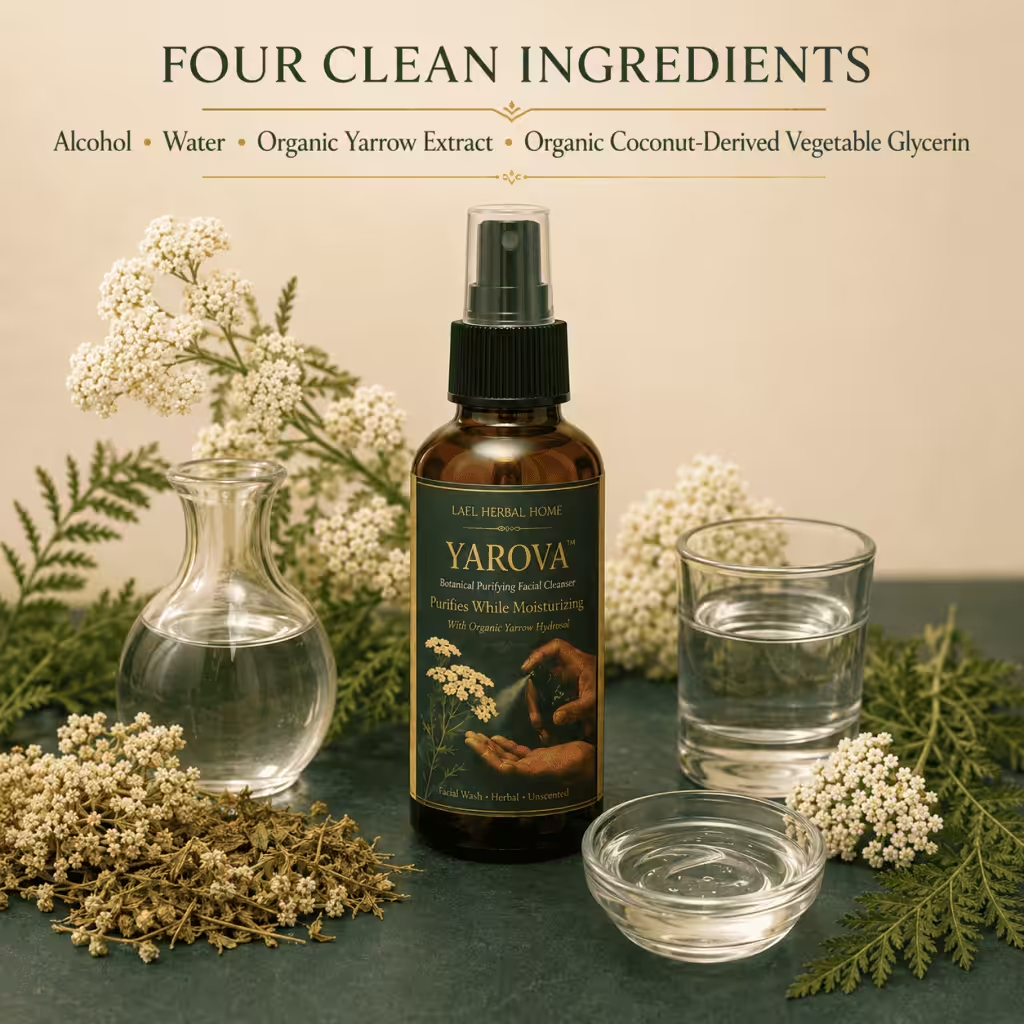
That same understanding inspired YAROVA™ Botanical Purifying Hand Cleanser.
YAROVA™ brings the traditional value of organic whole yarrow into a convenient fine mist for modern life. It purifies and refreshes the hands, while organic coconut-derived vegetable glycerin helps maintain a soft, comfortable, moisturized finish.
Nothing has been added merely to perfume it. Its naturally woody aroma comes from the yarrow itself—without synthetic fragrance or essential oils.
Keep YAROVA™ in your handbag, vehicle, workspace, or anywhere you want convenient botanical hand care without the tight, stripped feeling that can follow repeated cleansing.
Children must use YAROVA™ with adult supervision. Do not use it if you are allergic to yarrow or plants in the Asteraceae/daisy family.
Discover YAROVA™ Botanical Purifying Hand Cleanser: