Let’s Explore This Wonderful Tiny Whole-Food Nutrient
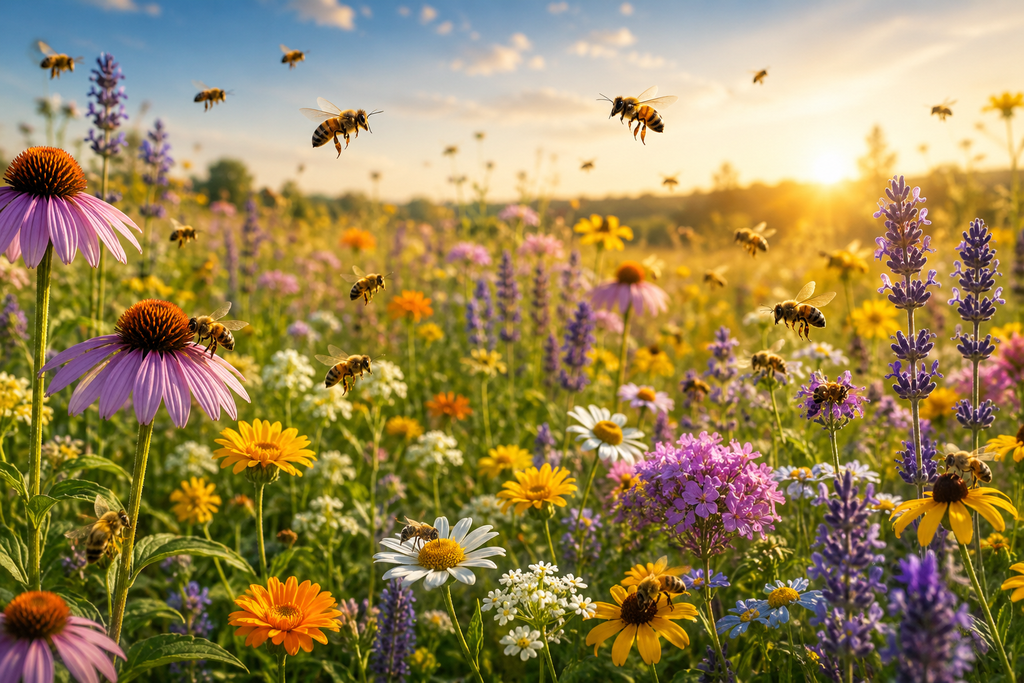
Bee pollen begins with a flower.
As a honeybee moves from blossom to blossom, microscopic pollen grains cling to the fine hairs covering her body. She uses her legs to gather those grains, moistening them with small amounts of nectar and natural bee secretions before packing them into specialized baskets on her hind legs called corbiculae.
Those colorful little bundles you sometimes see attached to a bee’s back legs are pollen loads.
Once the baskets are full, the bee carries them back to the hive as food for the colony. Bee pollen is therefore more than loose flower pollen—it is flower pollen that has been collected, moistened, compacted, and transported by the bee.
Once pollen is stored in the honeycomb and further transformed through fermentation, it becomes bee bread, which is a different hive product. Nettavia™ uses bee pollen itself.
Because bees forage from whatever plants are blooming around them, the finished pollen reflects the botanical environment where it was collected. That is why bee pollen can be yellow, gold, orange, brown, reddish, purple, or almost black—and why two batches can have noticeably different nutritional profiles.
So the next question becomes:
What are the bees actually bringing home, and why does it matter to the human body?
Protein and Amino Acids: The Building Materials
Bee pollen naturally contains protein and a broad range of amino acids, including essential amino acids that the human body must obtain through food. The exact protein content can vary dramatically according to the plants the bees visited.
Amino acids are involved in much more than muscle growth.
Your body uses them to build and maintain:
- muscle and connective tissue
- enzymes
- neurotransmitters
- immune proteins
- skin
- hair
- nails
- many hormones and signaling molecules
Your body is constantly breaking proteins down and rebuilding them. That makes amino acids part of everyday maintenance, repair, and normal metabolic function.
This is one reason bee pollen caught my attention as a food-based source of nourishment rather than simply another trendy supplement ingredient.
B Vitamins: Helping Turn Food Into Usable Energy
Bee pollen can naturally contain several members of the B-vitamin family, including thiamine, riboflavin, niacin, folate, and others, though the amounts vary considerably by botanical source.
B vitamins are involved throughout the metabolic pathways your body uses to transform carbohydrates, fats, and proteins into ATP—the usable energy that powers your cells.
This is an important distinction when we talk about energy.
Nutritional energy support is not the same thing as stimulation.
Caffeine can make you feel more alert. Proper nutrition helps provide the materials your body actually needs to produce energy in the first place.
That helps explain why bee pollen has traditionally developed a reputation around nourishment, vitality, and stamina rather than simply functioning as a stimulant.
Minerals: Tiny Nutrients With Enormous Jobs
Bee pollen can provide a range of macro- and trace minerals, including potassium, magnesium, calcium, phosphorus, iron, zinc, manganese, copper, and selenium. Again, the amounts vary widely depending on the plants and environment from which the pollen originated.
Each mineral has its own role.
Magnesium
Magnesium participates in hundreds of enzyme-driven reactions and contributes to normal muscle function, nerve signaling, energy metabolism, and electrolyte balance.
Potassium
Potassium is essential for fluid balance, nerve transmission, muscle contraction, and normal cardiovascular function.
Calcium
Most people associate calcium with bones, but it is also needed for muscle contraction, cellular communication, and nerve function.
Iron
Iron is central to hemoglobin, the protein that carries oxygen through the bloodstream.
Zinc
Zinc contributes to normal immune function, tissue repair, protein synthesis, and numerous enzyme systems.
Minerals may be needed in very different quantities, but even trace amounts can have major physiological responsibilities.
This mineral side of bee pollen becomes especially interesting when we later pair it with nettle leaf, one of herbalism’s classic nutritive plants.
Fatty Acids: Building and Communicating at the Cellular Level
Bee pollen also contains naturally occurring lipids and fatty acids.
Fat is often discussed only in terms of calories, but biologically it does far more than provide energy.
Fatty acids contribute to:
- the structure of cell membranes
- nervous-system function
- hormone production
- inflammatory signaling
- energy storage
- absorption and movement of fat-soluble compounds
Every cell in your body is surrounded by a membrane made largely from lipids.
So when I look at bee pollen as a nourishing food, its fatty-acid content belongs in the conversation right alongside vitamins and minerals.
Carotenoids: The Nutrition Behind Some of Those Beautiful Colors
Some of the yellows, oranges, and reddish tones seen in bee pollen come from naturally occurring pigments called carotenoids.
Carotenoids serve protective roles in plants, and many also have antioxidant activity in the human diet.
Certain carotenoids can be converted into vitamin A, which contributes to:
- normal vision
- skin and epithelial tissues
- immune function
- cellular growth and differentiation
- reproductive function
The amount and types of carotenoids present depend on the pollen’s botanical origin, which is another reason differently colored pollen granules are not simply cosmetic variations.
Polyphenols and Flavonoids: Plant Protection That Comes With the Food
Bee pollen also provides a variety of phenolic acids, polyphenols, and flavonoids.
Researchers have identified compounds such as quercetin, kaempferol, isorhamnetin, rutin, chlorogenic acid, and p-coumaric acid in different bee-pollen samples.
Plants produce many of these compounds as part of their own defense against environmental stress.
When we consume plant foods, these compounds can contribute antioxidant activity within the diet.
Oxidation itself is normal. Your body produces reactive molecules through everyday metabolism, immune activity, exercise, environmental exposures, and many other processes.
The goal is not to eliminate oxidation.
The goal is balance.
Bee pollen’s phenolic compounds are one reason researchers continue to study it for antioxidant and inflammation-modulating activity. Much of that research is still laboratory or animal based, so I would not turn those findings into promises about treating disease—but the chemistry itself is very real.
Naturally Occurring Vitamins and Other Bioactive Compounds
Bee pollen can also contain vitamins C and E, provitamin A compounds, several B vitamins, enzymes, phytosterols, and other biologically active constituents.
The key word here is variable.
Bee pollen does not come out of nature with a standardized Supplement Facts panel.
One batch may contain more of one vitamin or polyphenol and less of another.
That is why I do not describe bee pollen as a replacement for a balanced diet or as a standardized multivitamin.
I see it as something different:
A naturally complex whole food that contributes many different nutrients at once.
Why That Matters More Than One Isolated Nutrient
This is where bee pollen becomes especially interesting to me.
I am not impressed by it because it contains one specific vitamin.
I am impressed by the relationship between everything it contains.
Protein is present alongside minerals.
Fatty acids occur alongside fat-soluble compounds.
Carotenoids exist beside polyphenols and flavonoids.
Carbohydrates sit alongside amino acids and trace elements.
That is how whole foods naturally arrive.
It does not mean isolated nutrients never have a place. Sometimes they absolutely do.
But food provides a complexity that a list of individual synthetic compounds does not necessarily reproduce.
That is the perspective I bring to bee pollen: look at the entire nutritional package rather than chasing one headline nutrient.
What Does That Mean for Everyday Wellness?
Once you understand what is actually inside bee pollen, some of its traditional uses begin to make more sense.
Daily Energy and Vitality
Normal energy production depends on adequate protein, amino acids, carbohydrates, fatty acids, vitamins, minerals, and enzyme systems.
Bee pollen supplies representatives from many of those categories.
That makes its traditional association with vitality nutritionally understandable without needing to pretend it acts like an energy drug.
Immune Nutrition
Immune cells require protein, zinc, iron, fatty acids, vitamins, and numerous metabolic cofactors just like every other system in the body.
I therefore look at bee pollen primarily as something that can contribute to the nutritional environment required for normal immune function, rather than as something that needs to aggressively “boost” immunity.
Antioxidant Support
Its flavonoids, carotenoids, phenolic acids, and other compounds give bee pollen measurable antioxidant activity in laboratory research.
That is one of its better-established biological characteristics, even though researchers are still working out exactly how those effects translate into long-term human outcomes.
Why One Jar of Bee Pollen Can Be Completely Different From Another
This is one of the most important things to understand before purchasing bee pollen.
Its composition depends on:
- plant species
- geographical region
- climate
- soil conditions
- season
- rainfall
- bee foraging patterns
- collection methods
- processing
- storage
Bee pollen should therefore not be treated as one chemically identical substance.
A pollen collected from Mediterranean wildflowers may differ significantly from pollen collected in North America.
Even pollen collected in the same location can change between spring and late summer as different plants begin flowering.
That is why sourcing matters.
Processing and Storage Matter Too
The nutritional story does not stop when the bee returns to the hive.
How pollen is handled afterward can influence its quality.
Research comparing dried and frozen pollen over extended storage found changes in vitamin C, total phenolics, flavonoids, and antioxidant activity. In that study, frozen pollen generally retained these compounds better than dried pollen during longer storage periods.
That does not mean dried pollen has no nutritional value.
It means heat, oxygen, moisture, and storage time can affect delicate compounds.
When I am choosing bee pollen specifically because I value the whole food, I want it handled in a way that respects that food rather than processing it more than necessary.
Bee Pollen and Seasonal Allergies: A Word of Caution
Bee pollen frequently gets promoted as a natural approach to seasonal allergies.
That conversation needs more nuance.
Bee pollen literally contains plant pollen.
People who are sensitive to certain pollens can potentially react to those same or cross-reactive pollens when they consume bee pollen.
Published case reports document severe reactions, including anaphylaxis, particularly in people with existing seasonal pollen allergies.
So I do not believe in casually telling everyone with allergies to start taking spoonfuls of pollen.
Natural does not mean harmless to every person.
Anyone with known bee-product allergies, significant pollen allergies, or a previous reaction to bee pollen should approach it carefully and seek individualized guidance.
Why I Paired Bee Pollen With Nettle
Once I looked at everything bee pollen brings nutritionally, nettle became a very logical companion.
Bee pollen contributes breadth.
It brings proteins, amino acids, fatty acids, minerals, vitamins, carotenoids, flavonoids, and other phytonutrients.
Nettle contributes a different nutritional profile, especially through its longstanding use as a mineral-rich nutritive herb.
I did not want to build a product around a twenty-ingredient label simply because a long ingredient list looks impressive.
I wanted the ingredients to have a reason to be together.
Bee pollen brings nutritional diversity.
Nettle brings deep botanical nourishment.
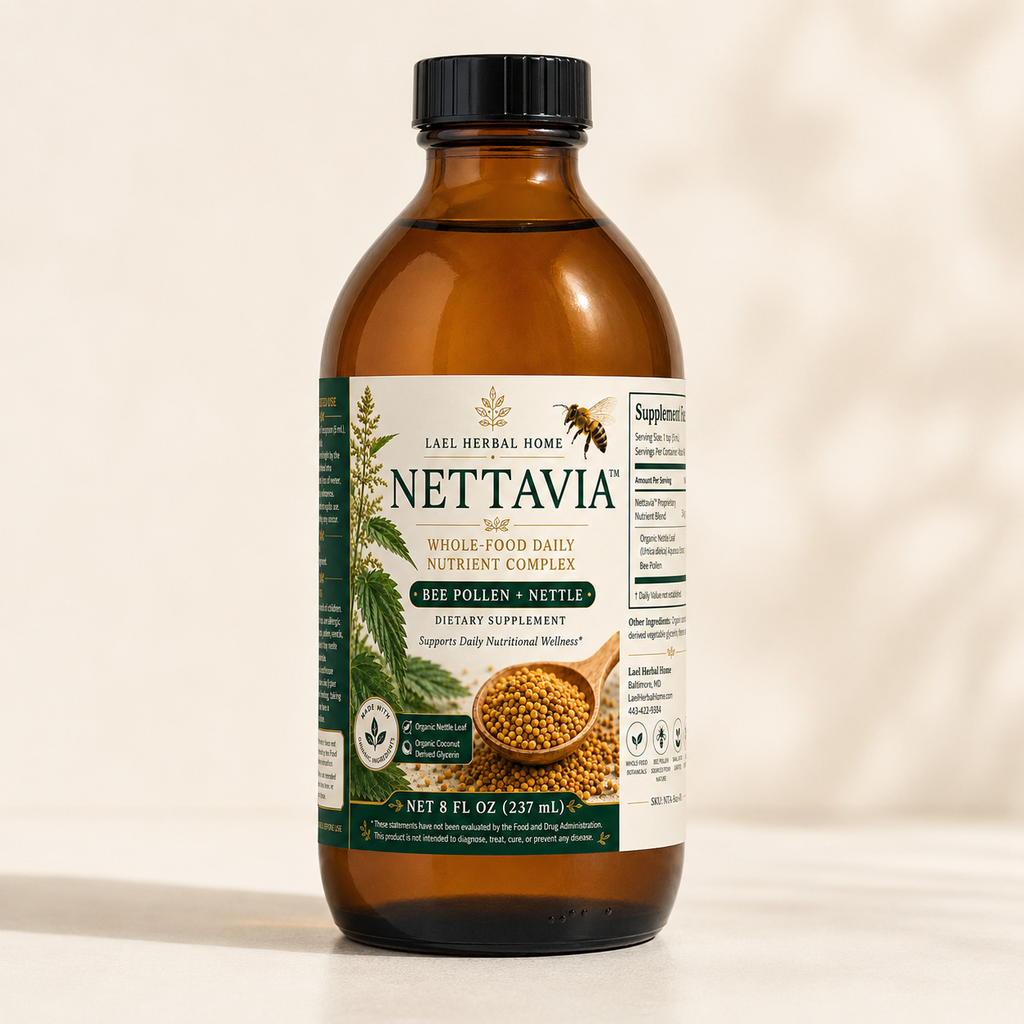
That pairing became the foundation for Nettavia™.
Meet Nettavia™ Whole-Food Daily Nutrient Complex
Nettavia™ was created for people who want a simple way to bring whole-food botanical nourishment into their daily routine.*
At its core are:
🐝 Whole bee pollen
🌿 Organic nettle leaf
🥥 Organic coconut-derived vegetable glycerin
No artificial colors. No unnecessary fillers. No complicated ingredient list.
Nettavia™ may be taken straight or mixed into approximately 6 ounces of water.
Suggested use: 1 teaspoon, 1–2 times daily.
Real Food. Real Energy. Real You.
The Bigger Lesson Behind Bee Pollen
I do not think bee pollen needs exaggerated promises to be impressive.
A flowering plant produces pollen.
A bee gathers it.
She combines and compacts it into food for the colony.
And inside those tiny granules are proteins, amino acids, fatty acids, minerals, vitamins, carotenoids, flavonoids, polyphenols, and other naturally occurring compounds.
That is remarkable enough.
The more we understand foods like bee pollen, the more obvious something becomes:
Nutrition does not always need to be complicated to be powerful.
Sometimes we simply need to understand what nature has already provided—and use it with intention.
These statements have not been evaluated by the Food and Drug Administration. This article is for educational purposes and is not intended to diagnose, treat, cure, or prevent any disease.
Want Personalized Herbal & Nutritional Support?
Whole foods and herbs can be powerful tools, but the best approach is the one that fits your body, your goals, and your lifestyle.
If you want help creating a more personalized wellness plan, book a Whole-Person Consultation with Lael Herbal Home. We’ll look at your nutrition, lifestyle, current concerns, and herbal support options together so your plan is tailored to you—not generic.