
One of the things that fascinated me while studying herbalism and holistic nutrition was realizing just how completely we’ve severed the mouth from the rest of the body. We treat our teeth and gums like their own little bathroom-mirror maintenance project, while our gut health lives in an entirely different mental category.
But food enters the body through only one door. Every single bite, every sip, every meal begins in the mouth. When you look at it through a whole-plant, traditional lens, it becomes impossible to pretend that the state of our oral health doesn’t set the stage for everything that happens downstream.
It turns out, there’s a lot more happening inside our mouths than simply chewing our food.
Every day, we swallow saliva without giving it a second thought. Yet that saliva is doing far more than simply keeping the mouth moist. As wellness teachers like Barbara O’Neill often emphasize when looking at the foundational steps of eating, the oral cavity is where true processing begins. Long before a meal reaches your stomach, your body is already orchestrating digestion. Mechanical chewing breaks food down into a manageable form, while your saliva begins preparing that food for everything that comes next.
Saliva is genuinely one of the body’s most overlooked protective systems. It is a living, complex fluid that lubricates food into a safe bolus for swallowing, washes away debris, and naturally cleanses the mouth. Beyond that, it acts as a powerful chemical buffer that neutralizes acids, while continuously supplying calcium and phosphate to help protect and remineralize our tooth enamel. It keeps the entire oral environment in a delicate, thriving balance.
Where the Mouth Meets the Gut
Because saliva is continuously produced and swallowed throughout the day, it naturally leads us to ask: what happens when that delicate balance is disrupted?
In a vibrant, resilient system built on whole foods, the body handles this transition of food and microbes beautifully. But when our daily rhythms slip—when we rush through meals without chewing, rely on processed foods loaded with refined sugars, skip our daily flossing, run on chronic exhaustion, or let stress compromise our natural saliva flow—our oral terrain shifts.
As classical teachers like Maimonides (Rambam) reminded us through their emphasis on moderation, prevention, and orderly daily habits, how we treat our bodies day-to-day matters profoundly. When daily care slips and chronic gum inflammation sets in, the local environment changes. Traditional herbalists like David Hoffmann have always viewed the body as a continuous, interconnected canal rather than isolated parts, recognizing that stagnation or chronic irritation anywhere along that path creates a wider systemic burden.
While modern science helps us understand that oral bacteria and inflammatory signaling can travel beyond the jawline, the underlying concept is timeless: local distress does not simply stay put. When poor oral hygiene and chronic periodontal inflammation go unchecked, that ripple effect can impact the entire body. The effects don’t all look the same, nor do they affect every person equally, but when chronic periodontal inflammation persists, several body systems may feel its influence:
- The Gastrointestinal Tract: Every single day, we swallow liters of saliva, carrying oral microbes and inflammatory byproducts straight down into the stomach and intestines. While a healthy gut usually manages these transients, research indicates that when the gut’s mucosal barrier or resident microbiome is vulnerable, migrating oral pathobionts and inflammatory signals can interact with and aggravate the lower digestive tract. PDF
- Metabolic Balance and the Pancreas: Clinical research demonstrates a clear, bidirectional relationship between oral health and metabolic function. Chronic oral inflammation releases systemic inflammatory mediators that can impair insulin sensitivity, making metabolic regulation significantly harder. PDF
- The Cardiovascular System: The constant spillover of inflammatory cytokines and bacteria from bleeding, diseased gums doesn’t stop at the jawline; it enters the circulatory system, where it can place an ongoing burden on blood vessels and cardiovascular tissues.
- Immune System Overdrive: When the mouth is locked in a persistent state of low-grade infection, your immune system stays on high alert, producing continuous inflammatory signaling that drains systemic vitality.
Modern hyper-specialized medicine loves to put every organ into a separate box, treating the teeth as if they belong to a mechanic and the gut as if it belongs to a gastroenterologist. But true holistic care has always recognized that what affects the entry point inevitably echoes through the entire ecosystem.
How Stress Compromises Natural Saliva Flow
When we think about dry mouth, we usually picture dehydration or a hot summer day. But as holistic practitioners and herbalists know, some of the most profound shifts in our physical terrain originate in our nervous system.
When life moves too fast, when we run on chronic exhaustion, or when we live in a constant state of low-grade emotional or mental stress, our body shifts straight into a sympathetic dominance—the classic “fight-or-flight” response.
In that state of biological high alert, the body prioritizes immediate survival mechanisms. It diverts blood flow toward your large muscle groups and heart, while non-essential housekeeping functions—including optimal digestion and salivary output—are pushed onto the back burner. Your salivary glands receive a signal to pump the brakes, drastically reducing both the volume and the protective quality of your saliva.
This stress-induced dry mouth (clinically known as xerostomia) does more than just make your mouth feel parched. It directly undermines the very defenses that protect your oral terrain:
- Loss of Acid Buffering: Saliva acts as your mouth’s natural buffer, neutralizing the acids produced by plaque bacteria after eating. When stress chokes off that flow, your oral pH drops, leaving your enamel vulnerable to acid erosion and decay.
- Stagnation and Bacterial Imbalance: Saliva is a moving, cleansing river that constantly washes food debris and unwanted microbes away from your teeth and gums. When the river dries up to a trickle, debris stagnates, creating an environment where dysbiotic bacteria can more easily gain a foothold.
- Interrupted Initial Digestion: Because saliva carries crucial enzymes like amylase to start breaking down starches before food ever hits your stomach, a dry mouth means your food enters the digestive tract unprepared, placing an unnecessary burden on your stomach and intestines.
When we talk about maintaining our daily rhythms, managing stress isn’t just about mental well-being—it is a foundational pillar of oral health. Protecting your smile means nurturing a nervous system that feels safe enough to rest, digest, and keep the protective waters of your mouth flowing freely.
Stepping Out of the Conventional Paradigm
We’ve been conditioned to outsource our health to a commercial system that treats the mouth with harsh, stripping chemical mouthwashes and synthetic quick fixes, while treating the gut with an entirely different set of isolated interventions.
Real health doesn’t come from a bottle of conventional antiseptic mouthwash that blasts away everything in its path. Just like your gut, your mouth thrives on balance, diversity, and gentle, whole-plant support. Stepping away from standard dental paradigms often means returning to what actually works: trusting the intelligence of traditional herbalism, nourishing your body with nutrient-dense foods, and utilizing earth-derived minerals and botanicals that work with your biology instead of trying to conquer it.
Let’s Talk About Your Routine!
Protecting your oral health doesn’t require harsh measures. It looks like brushing consistently, cleaning between your teeth each day, supporting healthy saliva, limiting frequent sugar exposure, and choosing oral care products that respect your body’s natural balance.
As spiritual teachings like those explored by Rebbe Nachman remind us, even our daily physical acts—like how we approach our meals and nourishment—can be carried out with mindfulness, presence, and gratitude. When we slow down, chew with intention, and care for our bodies with respect, eating transforms from a rushed routine into an act of true self-nurturing.
It is remarkable to consider how seamlessly our bodies are designed, with every single system whispering to the next. Caring for your mouth is not just about keeping a bright smile; it is one of the most direct, meaningful ways of caring for your entire body from the inside out.
I would love to hear from you in the comments below: Have you ever noticed a connection between your overall wellness and your dental health? What natural or traditional habits do you incorporate into your daily routine?
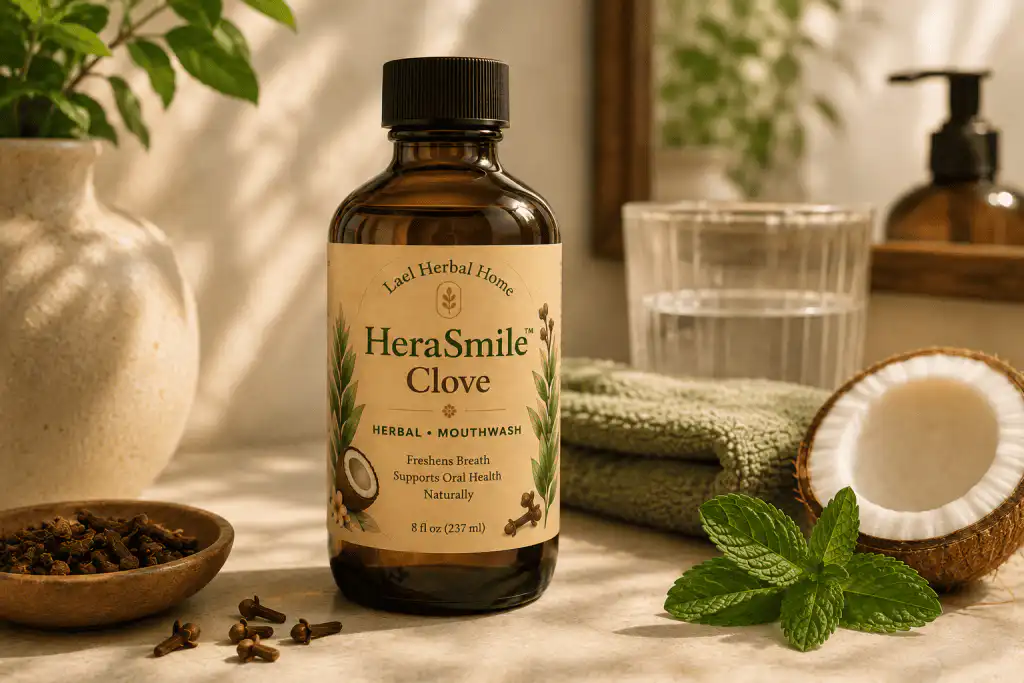
At Lael Herbal Home, I believe caring for your mouth is one small, intentional way of caring for your whole body. That’s why I handcraft my HeraSmile™ Tooth Powder and HeraFresca™ Mouthwash using time-tested herbs and minerals that support a healthy daily oral care routine alongside brushing, flossing, and regular dental care.