Rose has been used on the skin for generations, but understanding why it is useful makes the herb much more interesting than any commercial beauty claim.
The petals contain naturally occurring plant compounds—including polyphenols and quercetin—alongside a unique combination of astringent and moistening qualities. Together, these characteristics help explain why rose has held such a lasting place in traditional facial care.
The Astringent Side of Rose Tones the Tissue
Rose petals are naturally astringent.
An astringent herb acts on tissue by creating a gentle tightening and toning effect. On the face, this is why rose has traditionally formed the foundation of herbal facial toners and washes.
This is not the same thing as “closing pores.” Pores are not little doors that open and shut.
Instead, the surface of the skin can feel fresh, toned, and lightly tightened—all without relying on the harsh, stripping action of an alcohol-heavy toner.
And rose possesses another quality that makes it especially interesting.
Rose Can Tone Without Simply Drying the Skin
Many strongly astringent herbs can leave tissue feeling dry.
Rose is different.
Herbal tradition describes rose petals as having both an astringent quality and a demulcent, or moistening, quality.
That combination helps explain why rose is regarded as a gentler astringent than many strongly drying herbs.
For facial care, that balance matters. The goal is not to strip the skin until it feels tight and uncomfortable. It is to gently tone and refresh it while respecting the moisture the skin needs.
The Antioxidants in Rose Support the Skin Against Everyday Stress
Beneath their delicate appearance, rose petals contain polyphenols and quercetin—naturally occurring antioxidant compounds.
Our facial skin is exposed every day to outside elements, indoor environments, and other sources of oxidative stress. Antioxidant-rich plant compounds help provide support against that everyday stress.
This is one of the reasons using the actual herb matters.
The beneficial plant compounds are found within the petals themselves. They are not created by making something smell like a rose.
Rose Has a Long History as a Soothing Facial Herb
Rose has also traditionally been used in gentle preparations for skin that feels irritated, sensitive, or in need of calming.
That soothing quality works beautifully alongside its astringency.
Rose does not need to aggressively strip or overwhelm the face to have a place in skin care. Its value comes from the combination of qualities already present within the plant: gentle toning, soothing, refreshing, and antioxidant support.
Sometimes the skin does not need something stronger.
Sometimes it needs something gentler.
Why Using the Petal Matters
There is a vast difference between using the actual plant and using a synthetic simulation designed merely to smell like roses.
Polyphenols, quercetin, and the other naturally occurring constituents of rose belong to the flower.
A fragrance can imitate an aroma.
It cannot become the rose petal.
When the actual petals are used in a botanical preparation, the preparation begins with the herb itself—not an imitation of its scent.
That distinction matters when the reason for choosing rose is what the plant genuinely offers, rather than simply how it smells.
What Rose Is Really Offering the Face
When we bring those qualities together, rose has a beautifully simple profile for facial care:
- Astringent properties gently tone the surface of the skin.
- Astringent and moistening qualities give rose its traditionally gentle character.
- Soothing qualities make rose useful in gentle facial preparations.
- Polyphenols and quercetin provide antioxidant support.
Rose does not need to be turned into a miracle cure to be valuable.
What the plant genuinely offers is already enough.
That is one of the things I appreciate most about herbalism: learning what the Creator placed within a plant, understanding its purpose, and using it honestly.
Bringing Rose Into Daily Facial Care
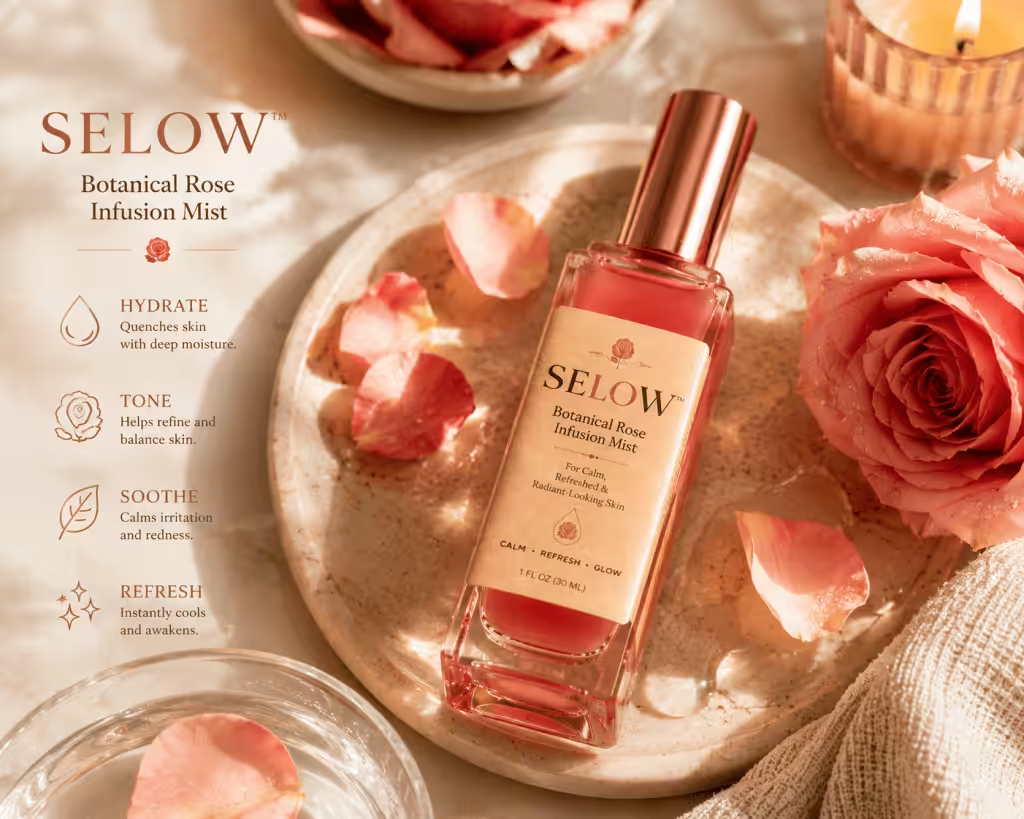
These qualities are the reason SELOW™ Botanical Rose Infusion Mist exists.
SELOW™ begins with organic red rose petals slowly infused into pure spring water, allowing the actual plant to lead the formula. Organic coconut-derived vegetable glycerin is then added to help the skin hold onto moisture, complementing the gentle toning and soothing qualities of rose.
Healthy Skin Goes Deeper Than the Surface
What we place on the skin matters, but healthy skin is also connected to what is happening inside the body.
Nutrition, hydration, hormones, digestion, stress, and other individual factors can all be pieces of the larger picture.
If your skin—or your body—is asking for deeper answers, you do not have to navigate those questions alone.
As a Certified Herbalist and Holistic Nutrition Consultant, I work with clients one-on-one to look at the whole person, identify areas that may need additional support, and build an individualized approach using traditional herbalism and holistic nutrition.
Lael Herbal Home · Small Batch · Herbal · Intentional.