LAEL HERBAL HOME · BOTANICAL EDUCATION
When Your Vision Begins to Change: Why Bilberry Has Been Trusted for the Eyes for Generations
Vision is not static. Over time, many people notice that their eyes begin to work differently. Reading may take more effort, small print may not look as sharp, nighttime driving may become more difficult, or the eyes may simply tire faster than they once did. Sometimes a prescription that worked well for years needs to be changed.
Most of the time, we respond to those changes by correcting what we see with glasses or contacts. Those tools are valuable because they change the way light is focused so that we can see more clearly. But correction is only one side of the conversation. It does not tell us what is happening within the living tissues of the eye or what those tissues require every day in order to function.
The eye is much more than a lens. The retina has to receive light and turn it into electrical information. Photoreceptor cells have to respond to different levels of light. Tiny blood vessels have to continuously supply oxygen and nutrients. The lens has to remain clear enough to focus light. Nerve tissue has to carry visual information from the eye to the brain. All of those structures also have to protect themselves from the constant exposure to light, oxygen, and normal metabolic activity.
So when vision changes, I think there is another question worth asking alongside, “How do I see more clearly?”
What do the tissues that are actually doing the seeing need in order to function well?

What Do the Tissues of the Eye Actually Need?
When I say the eyes need nourishment, I do not mean that in a vague way. The different structures inside the eye depend on very specific building materials and nutrients.
The retina is one of the most metabolically active tissues in the body. Its photoreceptor cells—the rods and cones that receive light—need a continuous supply of oxygen and glucose simply to make the energy required to function. Their cell membranes are especially rich in the omega-3 fatty acid DHA, which helps maintain the structure and flexibility of these light-sensitive cells.
The rods also depend heavily on vitamin A. Vitamin A is used to form retinal, which becomes part of rhodopsin, the light-sensitive pigment rods use to respond in dim lighting. Zinc is involved in the metabolism and movement of vitamin A within the eye, so even that one process depends on more than a single nutrient.
The central retina also contains the carotenoids lutein and zeaxanthin. They accumulate in the macula, the area responsible for detailed central vision, where they help filter certain wavelengths of light and participate in the eye’s antioxidant defenses.
The lens has a completely different job. It must remain transparent while bending incoming light so that it can be focused onto the retina. The lens is made largely from highly organized proteins called crystallins, and because those proteins have to remain intact for decades, the lens relies heavily on protective compounds such as glutathione and vitamin C to help manage oxidative stress.
Then there are the blood vessels feeding the eye. Those vessels are made from living endothelial cells and connective tissue. Maintaining that structure requires adequate protein and amino acids along with nutrients such as vitamin C and copper, which participate in collagen and connective-tissue formation.
The optic nerve has its own nutritional requirements as well. Nerve tissue depends on fatty acids, amino acids, energy, and nutrients including B1, B6, folate, and B12 to help maintain normal nerve structure and function.
That is what I mean when I say the eyes need nourishment. It is not one vitamin, one mineral, or one herb. The eye is a living organ that depends on fatty acids, amino acids, vitamins, minerals, glucose, oxygen, antioxidants, and healthy circulation all working together.
So where does bilberry fit into that much larger picture?
What Does Bilberry Actually Provide?
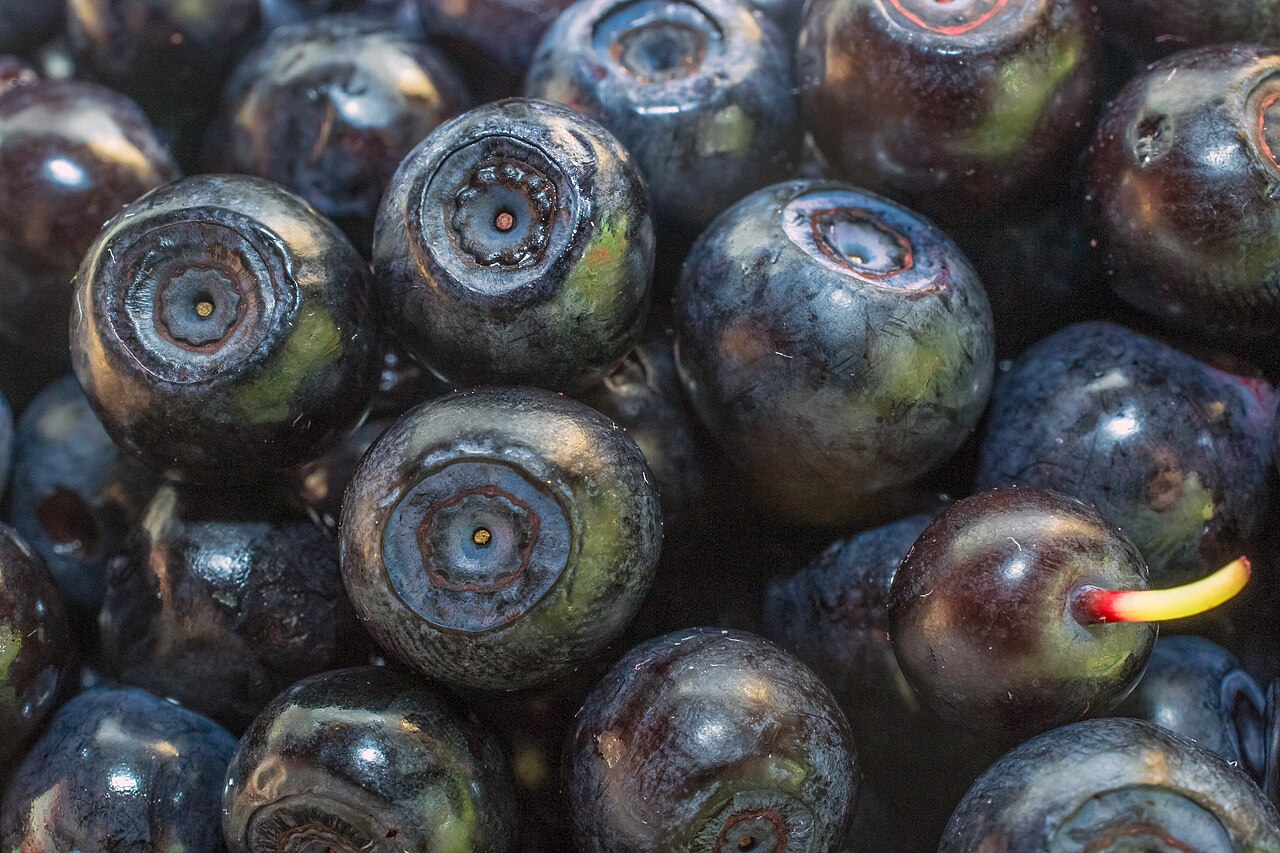
Bilberry does not replace vitamin A, DHA, zinc, lutein, or the other nutrients the eye depends on. Its role is different, but that does not mean the berry itself is nutritionally empty outside of its anthocyanins.
Whole bilberry provides a natural matrix of vitamins, minerals, fiber, pigments, and plant compounds. Depending on the growing conditions and whether the fruit is fresh or dried, bilberry naturally contains vitamin C, vitamin E, small amounts of vitamin A activity, thiamine (B1), riboflavin (B2), niacin (B3), vitamin B6, folate, and vitamin K. Its mineral profile includes potassium, calcium, magnesium, phosphorus, iron, manganese, zinc, copper, and trace amounts of selenium. Bilberry also contains naturally occurring carotenoids, including beta-carotene, lutein, and zeaxanthin.
I want to be careful here, because this matters: Myrtilia™ provides 1 gram of whole bilberry fruit per day, not 100 grams of berries. So I am not claiming that two capsules supply meaningful Daily Values of all of those vitamins and minerals. The point is that the berry itself is chemically and nutritionally complex, not that one gram replaces a nutrient-dense diet.
Then we get into what bilberry is especially rich in: its polyphenols. Bilberry contains anthocyanins, flavonols such as quercetin, myricetin, and kaempferol derivatives, catechins, proanthocyanidins, tannins, phenolic acids, and even small amounts of other compounds such as resveratrol. Its anthocyanins are especially diverse, including forms derived from delphinidin, cyanidin, petunidin, peonidin, and malvidin. Bilberry is considered one of the richer natural dietary sources of anthocyanins, and those pigments are present throughout much more of the fruit than they are in many cultivated blueberries.
So when I say I wanted the whole fruit, this is what I mean. I am not looking at bilberry as if anthocyanins are the only useful part and everything else is filler. The fruit comes with vitamins, minerals, carotenoids, fiber, tannins, flavonoids, phenolic acids, and multiple families of polyphenols already existing together in one food.
Its strongest herbal identity may still be its relationship with capillaries, microcirculation, and antioxidant protection, but that activity exists inside a much broader nutritional and botanical matrix.
Why Does Circulation Matter So Much to Vision?
The retina can contain all of the right structures, but those structures still have to be continuously supplied. Oxygen has to arrive. Glucose has to arrive. Amino acids, fatty acids, vitamins, minerals, and other nutrients have to arrive. Metabolic waste also has to be carried away.
That is what circulation helps accomplish.
Some of the vessels serving the tissues of the eye are extremely small. Blood flow through those smallest vessels is called microcirculation. I think of the circulatory system like a delivery network: large vessels are the highways, while capillaries are the tiny streets that actually reach the tissues.
This is one of the reasons bilberry developed such an important place in traditional eye herbalism. My herbal materia medica describes bilberry in connection with capillary integrity and microcirculation, including the tiny circulation within the eye.
That does not mean bilberry is literally carrying vitamin A or DHA into the retina. The bloodstream does that. Bilberry’s traditional role is more about supporting the small-vessel environment through which that nourishment must travel.
That is a far more meaningful explanation than simply saying, “Bilberry is good for eyesight.”
Why Do Bilberry’s Dark Pigments Matter?
Now we can look at the second part of the picture: protection.
The retina is metabolically busy. It uses large amounts of oxygen, contains delicate fatty membranes, and spends every waking hour interacting with light. Normal metabolism naturally produces reactive molecules that the body has to keep under control.
That is what we mean when we talk about oxidative stress. It is not some mysterious toxin. It is part of the normal chemistry of living cells, especially highly active cells. The body has its own antioxidant systems to keep that chemistry balanced.
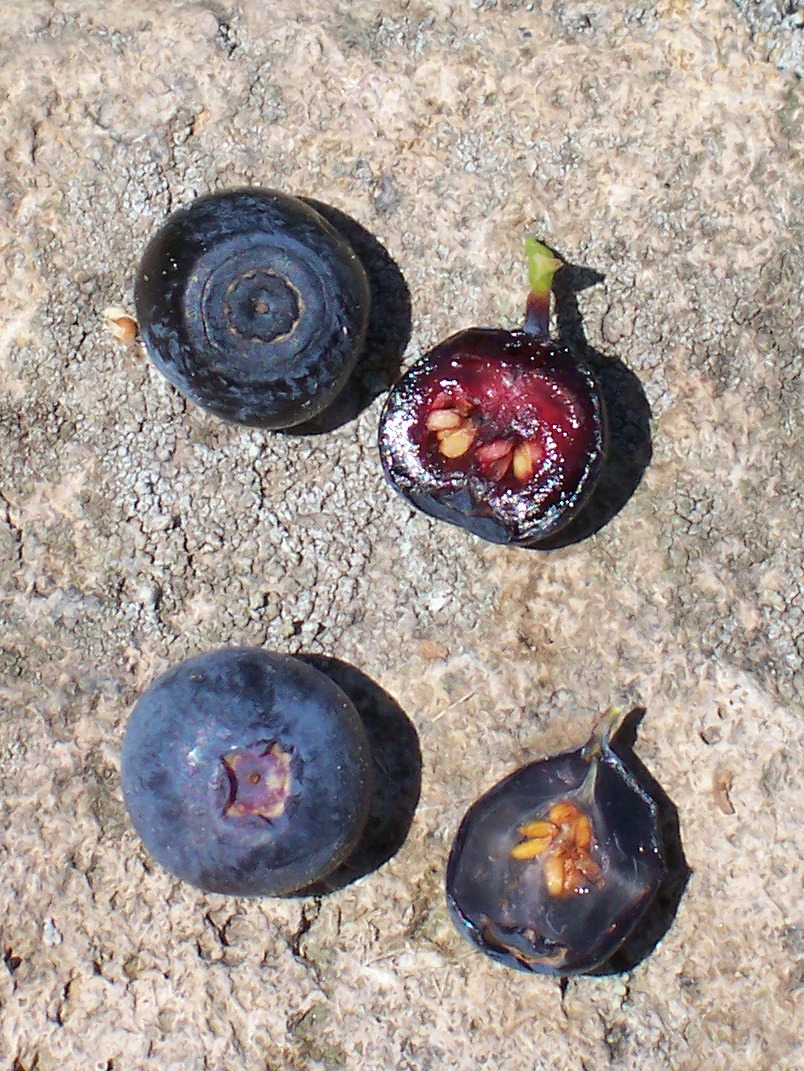
Bilberry’s anthocyanins and other polyphenols are interesting because they can participate in that larger protective network. Research on bilberry identifies anthocyanins as its dominant polyphenol group, but the fruit also contains flavonols, phenolic acids, catechins, and other compounds that contribute to its antioxidant activity.
So bilberry sits at the intersection of two important needs:
the vascular system that helps deliver nourishment
and
the antioxidant environment helping protect delicate tissue from ongoing stress.
It does not replace glutathione, vitamin C, vitamin E, selenium-dependent enzymes, or carotenoids. It adds another whole group of plant compounds to that larger protective system.

What Does Bilberry Have to Do With Tired Eyes?
Not every visual complaint begins in the retina. Your eyes also have to focus.
Inside the eye is a circular structure called the ciliary muscle. This muscle changes tension on the lens so your eye can shift between something far away and something close to your face. When you spend long periods reading, scrolling on a phone, working on a computer, sewing, studying, or doing detailed close-up work, that focusing system stays active for long periods.
So why would bilberry be discussed in relation to tired or strained eyes?
Part of the answer is traditional use, but there is also research using bilberry preparations in people experiencing visual fatigue after prolonged screen or close-up work. The likely relevance is not that bilberry “relaxes the eye” like a drug. It is that the focusing muscles and surrounding tissues are still living tissue with blood flow, energy demands, and oxidative stress.
That is why I think the tired-eye discussion makes more sense when we stop thinking of the eye as a passive camera.
It is an active organ.
Why Is Bilberry Associated With Night Vision?
Bilberry’s association with low-light vision is probably one of its most famous traditional uses, but to understand where that idea comes from, we first need to understand what allows us to see in dim light.
Inside the retina are photoreceptor cells called rods and cones. Cones handle detailed and color vision especially well in brighter light, while rods become much more important as light levels fall.
Rods contain rhodopsin, a light-sensitive pigment. Rhodopsin includes a vitamin-A-derived molecule called retinal. When light reaches rhodopsin, it triggers a series of reactions that eventually becomes a nerve signal your brain can interpret.
That is why vitamin A is directly required for normal dark adaptation.
So where does bilberry enter that process?
Bilberry does not replace vitamin A or build rhodopsin in the same way. Its anthocyanins have instead been studied in relation to retinal tissue, photoreceptor function, and rhodopsin-related processes. That gives us a plausible explanation for why bilberry became historically connected with low-light vision without pretending the berry is a substitute for vitamin A or a guaranteed correction for night vision.
That distinction matters.
Traditional observation and modern physiology can complement one another without forcing them to say more than they actually do.
Why Is Bilberry More Than an “Eye Herb”?
Once we understand what is inside the fruit, its broader herbal reputation becomes easier to understand.
Bilberry does not somehow become a different plant when it reaches another part of the body. The same anthocyanins, tannins, flavonoids, proanthocyanins, phenolic acids, vitamins, minerals, and fiber are interacting with systems throughout the body.
Its tannins help explain why dried bilberry fruit developed traditional use as an astringent, especially in digestive herbalism. Its polyphenols help explain why it has been researched in relation to vascular and metabolic health. Its traditional capillary affinity helps explain why herbalists have discussed it in relation to circulation beyond the eye as well.
This is one of the things I appreciate most about whole-plant herbalism.
The body itself is interconnected, and plants rarely fit neatly into one artificial category such as “eye herb,” “digestive herb,” or “circulation herb.”
Bilberry became especially famous for the eyes, but the properties behind that reputation belong to the entire fruit.
Why Did I Choose Whole Bilberry Instead of an Extract?
There are concentrated bilberry extracts available, and extracts have a legitimate place in herbal medicine.
But that was not what I wanted for Myrtilia™.
My herbal materia medica specifically recognizes dried bilberry fruit that has been powdered and placed into capsules as a traditional preparation.
I wanted to work with that form.
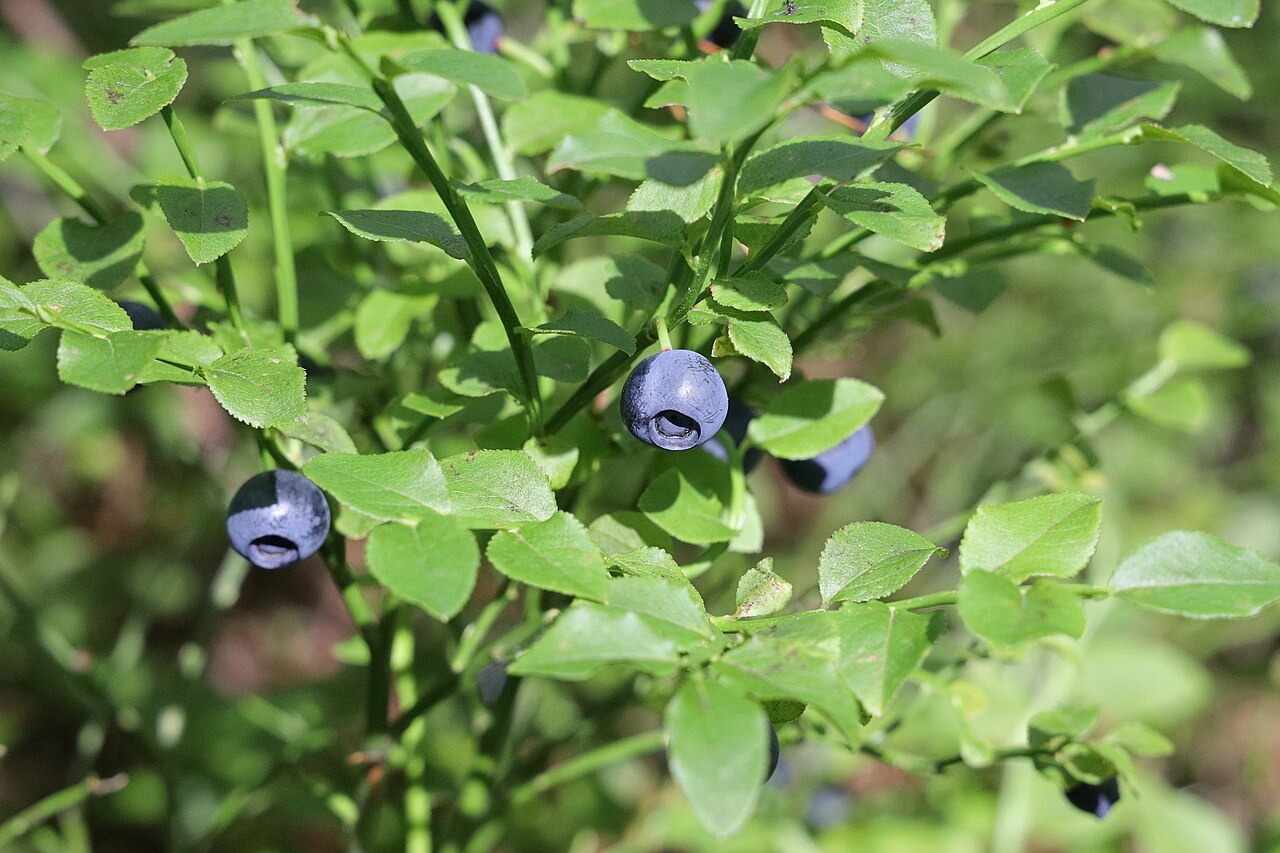
I begin with organic whole dried Vaccinium myrtillus fruit. I grind the whole berries myself and place that powder directly into the capsules.
Why does that matter?
Because anthocyanins are not the only constituents naturally present in bilberry. The fruit also contains tannins, flavonoids, proanthocyanins, phenolic acids, fiber, pectin, vitamins, minerals, carotenoids, and the rest of the berry matrix surrounding those compounds.
An extract intentionally changes that relationship by concentrating selected constituents. Again, that is not automatically bad. It is simply a different preparation.
For Myrtilia™, I wanted something closer to the fruit herbalists traditionally worked with.
I wanted the berry.
Why Does Whole Fruit Matter?
This is where my philosophy of herbalism really comes into the formulation.
When modern research identifies an interesting constituent such as anthocyanins, it is very easy for the conversation to become:
“How much of that one compound can we extract?”
But I also want to ask:
“What else was growing alongside it?”
Plants are chemically complex. Different constituents may affect astringency, digestion, absorption, tissue interaction, flavor, stability, and biological activity in ways that are not always captured when one compound becomes the entire focus.
That does not mean every compound in a plant is equally important or that whole fruit is automatically superior to every extract in every situation.
It means I do not think we should assume that everything surrounding the best-known compound is irrelevant.
With Myrtilia™, keeping the whole fruit allows the anthocyanins to remain within the broader botanical matrix in which they naturally occurred.
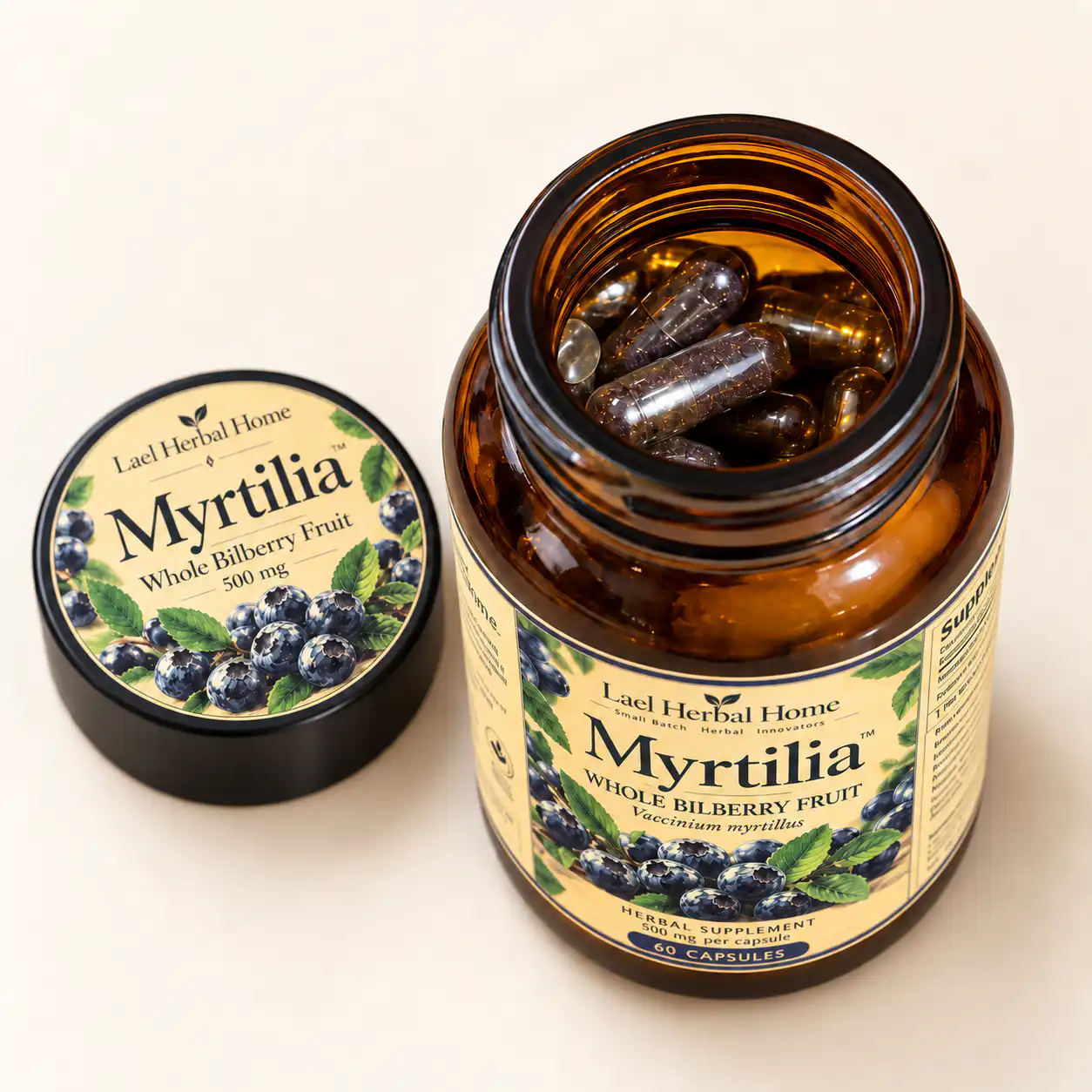
Why Do I Grind the Fruit Myself?
Myrtilia™ is also different from buying a large bag of commercially powdered bilberry and simply filling capsules from it.
I start with the whole organic dried fruit.
When I need to make Myrtilia™, I grind the berries into powder myself and encapsulate them in small batches.
Why bother doing that extra work?
Because once a botanical is powdered, much more surface area becomes exposed to oxygen, light, humidity, and handling. Keeping the fruit whole until I need to grind it lets me store the plant in a less processed form for longer and gives me direct control over the ingredient from whole berry to finished capsule.
It also means I know exactly what I put into the capsule.
Whole bilberry fruit.
No filler.
No unnecessary extras.
That is the kind of small-batch herbal preparation I wanted Myrtilia™ to be.
How Did I Choose the Amount in Each Capsule?
My herbal materia medica specifically lists 500 mg capsules of whole bilberry, with traditional use of up to four capsules daily in the context of supporting circulation within the eye.
My own capsules also came out almost exactly at that amount. When I weighed 100 empty capsules and then weighed the same 100 after filling them with the bilberry I had ground, the difference was 50 grams.
That means the average capsule contains approximately:
500 mg whole bilberry fruit.
For Myrtilia™, I chose a suggested serving of 2 capsules daily, which provides:
1,000 mg of organic whole bilberry fruit per day.
Each bottle contains 60 capsules, making it a 30-day supply at that serving.
I chose two capsules rather than automatically using the upper traditional amount because I wanted the daily routine to remain practical while still supplying a meaningful amount of actual whole fruit.
So What Is Bilberry Actually Doing in the Bigger Picture?
This is the question I think should be answered before anyone buys the product.
Bilberry is not supplying every nutrient required for healthy vision.
It is not replacing DHA.
It is not replacing vitamin A.
It is not providing large amounts of every vitamin or mineral the eye uses.
And it does not replace appropriate vision correction or evaluation when something changes.
What bilberry does bring is a whole-fruit combination of anthocyanins, flavonoids, tannins, phenolic acids, carotenoids, fiber, naturally occurring vitamins and minerals, and other plant constituents, together with a long traditional relationship with capillaries, small-vessel circulation, and the tissues of the eye.
That places it within a larger approach to eye health rather than pretending it is the entire approach.
Healthy vision depends on nutrition, blood flow, antioxidant protection, structural integrity, nerve function, fatty acids, energy production, and many other factors working together.
Bilberry is one whole-food herbal piece of that larger picture.
And that is exactly how I wanted to use it.
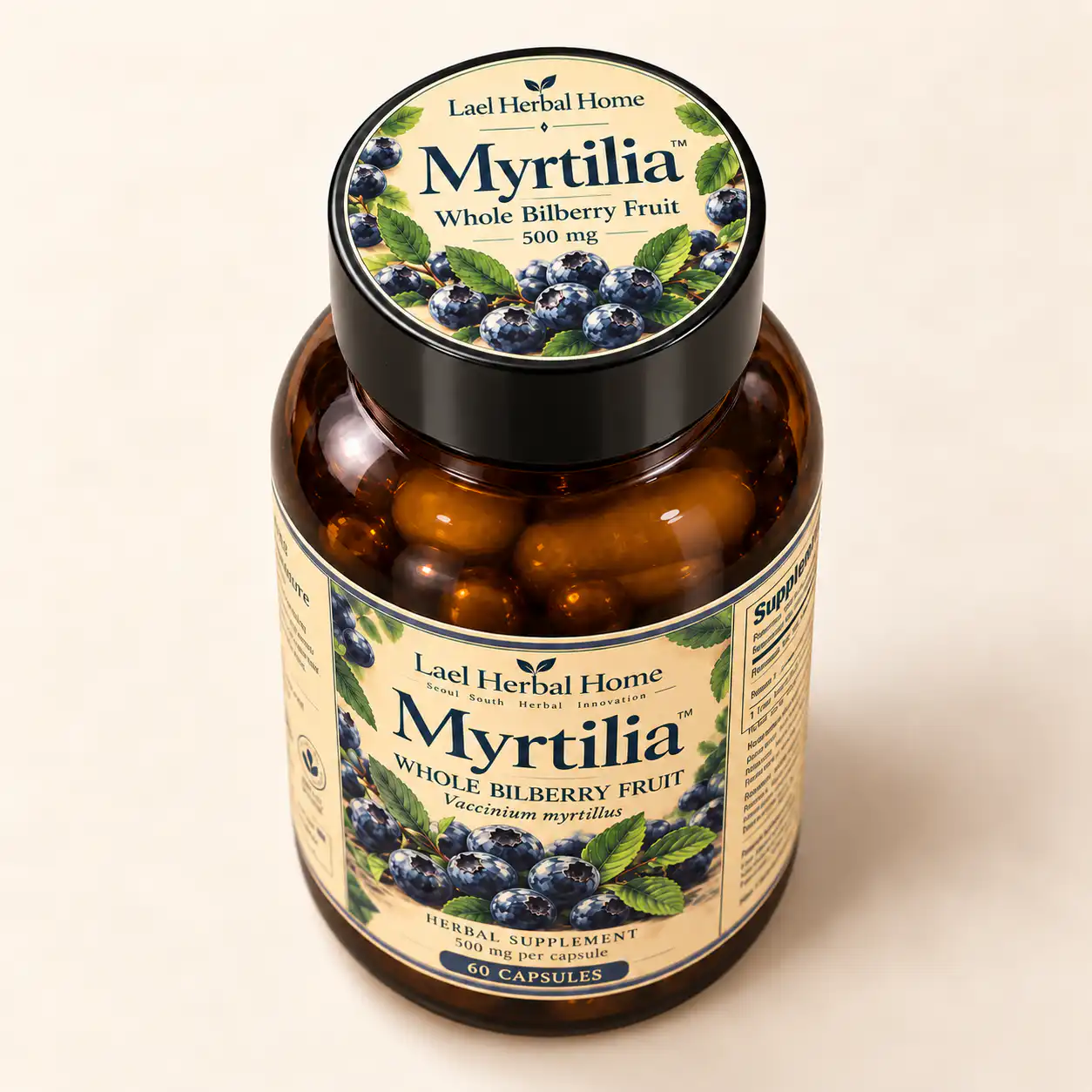
Myrtilia™ Whole Organic Bilberry Fruit
Myrtilia™ is made from organic dried Vaccinium myrtillus fruit that I grind and encapsulate in small batches.
Each daily serving provides 1,000 mg of organic whole bilberry fruit, with 500 mg per capsule, 2 capsules daily, and 60 capsules per bottle for a 30-day supply.
There is no standardized extract, no unnecessary fillers, and no mass-produced bulk bilberry powder—just the whole dried fruit prepared in small batches.
I created Myrtilia™ because I wanted people to have access to bilberry in the form I value as an herbalist: the actual fruit, kept whole until I am ready to grind it, and used as part of a much larger understanding of what healthy eye tissue requires.
A Note on Herbal Safety
Bilberry is a whole fruit with a long history of food and traditional herbal use, but concentrated daily use should still be approached intentionally. People taking anticoagulant medications or those with a diagnosed bleeding disorder should speak with a qualified healthcare professional before using medicinal amounts.
These statements have not been evaluated by the Food and Drug Administration. This product is not intended to diagnose, treat, cure, or prevent any disease.