
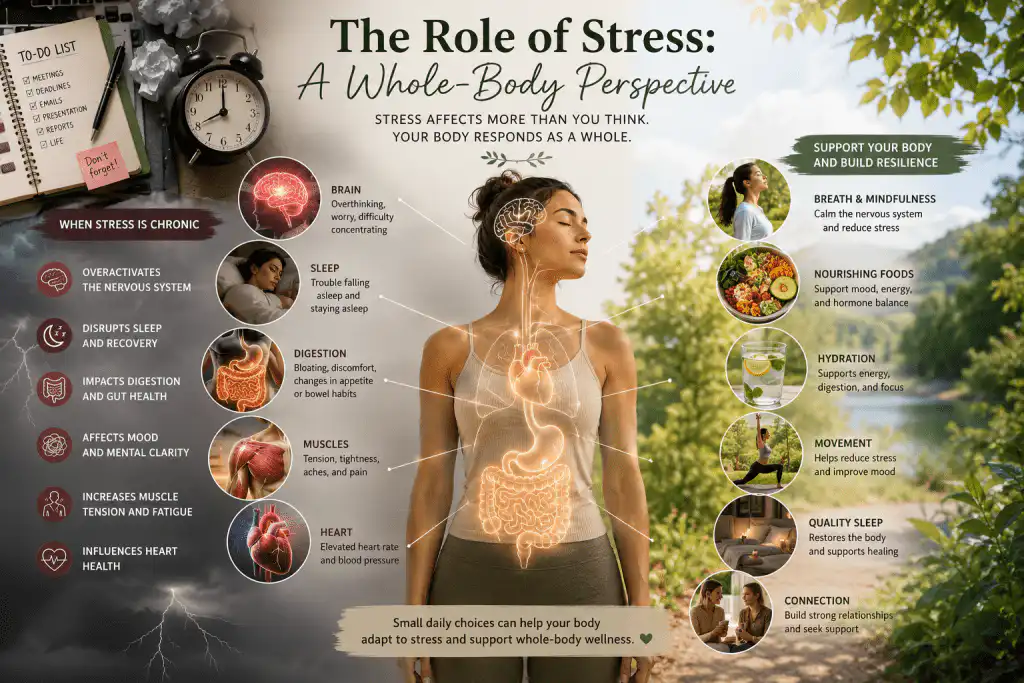
The Role of Stress: A Whole-Body Perspective
Stress is a normal part of life. In small amounts, stress can help us respond to challenges, stay alert, and adapt to changing situations. However, when stress becomes chronic or overwhelming, it may influence many different systems throughout the body.
While stress is often thought of as an emotional experience, its effects extend far beyond mood alone. The body responds to stress as a whole, which is why prolonged periods of stress may impact physical, mental, and emotional well-being.
Understanding the Stress Response
When the body perceives a threat or challenge, it activates what is commonly known as the “fight-or-flight” response.
During this process, stress hormones such as cortisol and adrenaline are released. These hormones help prepare the body to respond quickly by:
- Increasing alertness
- Raising heart rate
- Redirecting energy resources
- Increasing blood sugar availability
- Sharpening focus
This response can be helpful during short-term situations. However, the body was not designed to remain in this heightened state continuously.
Stress and the Nervous System
The nervous system plays a central role in the stress response.
When stress becomes ongoing, many individuals may experience symptoms such as:
- Difficulty relaxing
- Increased tension
- Poor sleep quality
- Feeling overwhelmed
- Difficulty concentrating
- Increased irritability
The nervous system and the rest of the body are closely connected, which is why stress can often be felt physically as well as emotionally.
Stress and Digestion
Many people notice changes in digestion during stressful periods.
Common experiences may include:
- Changes in appetite
- Digestive discomfort
- Changes in bowel habits
- Increased digestive sensitivity
This relationship highlights the strong connection between the brain and the digestive system.
Stress and Sleep
Quality sleep plays an important role in overall wellness.
When stress levels are elevated, falling asleep or staying asleep may become more difficult.
Poor sleep may then contribute to:
- Fatigue
- Reduced focus
- Increased stress perception
- Changes in mood
- Reduced resilience
This can create a cycle where stress influences sleep and poor sleep further contributes to stress.
Stress and Nutritional Habits
Stress may also influence food choices and eating patterns.
Some individuals may experience:
- Increased cravings
- Reduced appetite
- Skipping meals
- Reliance on convenience foods
- Changes in meal timing
Because nutrition provides the body with essential building blocks for daily function, maintaining nourishing eating habits during stressful periods can be especially important.
Stress and Physical Wellness
The effects of stress are not limited to the mind.
Many people experience physical manifestations of stress, including:
- Muscle tension
- Headaches
- Fatigue
- Changes in energy levels
- Increased feelings of physical strain
These experiences demonstrate how closely connected the body’s systems truly are.
Supporting the Body During Stressful Times
While stress cannot always be eliminated, there are many habits that may help support overall wellness:
- Prioritizing sleep
- Spending time outdoors
- Eating nutrient-dense foods
- Maintaining hydration
- Practicing deep breathing
- Engaging in regular movement
- Connecting with supportive relationships
- Creating time for rest and recovery
Small daily practices often have a meaningful impact over time.
A Whole-Body Perspective
The body functions as an interconnected system rather than a collection of separate parts.
Stress may influence digestion, sleep, energy, mood, eating habits, and overall well-being. Understanding these connections can help us view wellness through a broader lens.
By supporting the body as a whole, we can create a stronger foundation for resilience, balance, and long-term wellness.