
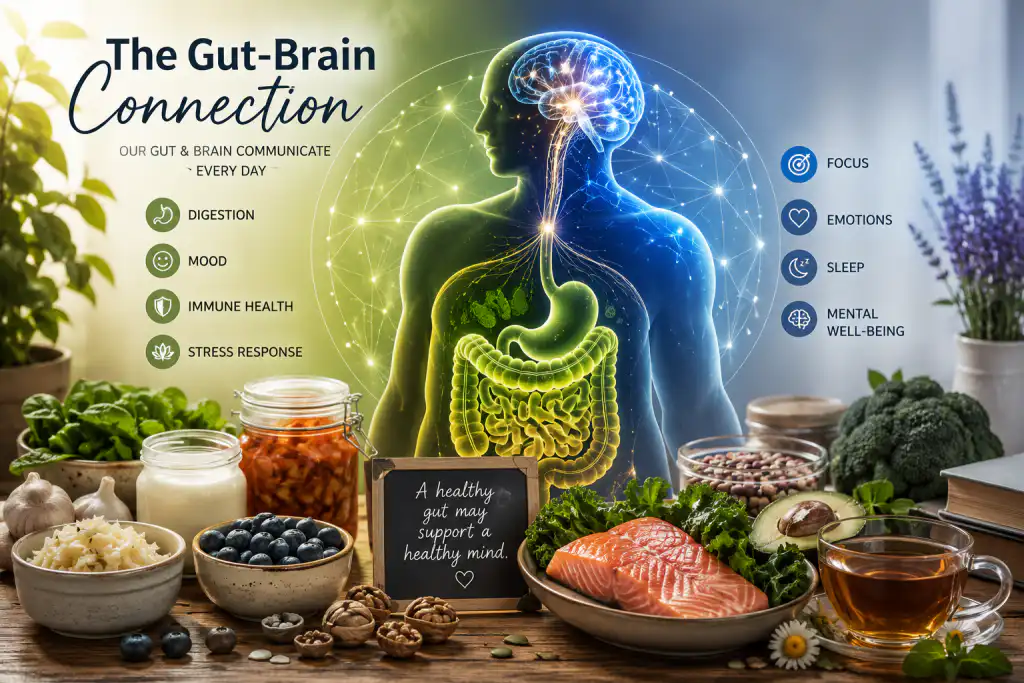
The Gut-Brain Connection: Can Digestive Health Influence Mental Wellness?
For many years, the digestive system and the brain were viewed as separate parts of the body with completely different functions. Today, researchers are increasingly recognizing that these two systems are closely connected through what is often referred to as the gut-brain connection.
This communication network allows the digestive system and the brain to constantly exchange information. As a result, what happens in the gut may influence how we feel physically, emotionally, and mentally.
What Is the Gut-Brain Connection?
The gut and the brain communicate through several pathways, including the nervous system, hormones, immune signaling, and various compounds produced within the digestive tract.
One of the most important communication pathways is the vagus nerve, which serves as a direct connection between the brain and many organs, including the digestive system.
This constant communication helps regulate many everyday functions such as:
- Digestion
- Appetite
- Stress responses
- Sleep patterns
- Energy levels
- Mood and emotional well-being
The Digestive System Is More Than Digestion
The digestive system does much more than break down food.
It also plays important roles in:
- Nutrient absorption
- Immune function
- Hormone regulation
- Communication with the nervous system
Because of these responsibilities, digestive health may influence many aspects of overall wellness.
When digestion is not functioning optimally, the body may struggle to absorb nutrients needed for normal function.
Nutrients and Brain Function
The brain requires a steady supply of nutrients to perform its many tasks.
Some nutrients commonly studied for their role in brain and nervous system function include:
- B vitamins
- Magnesium
- Zinc
- Iron
- Omega-3 fatty acids
- Amino acids from protein
- Vitamin D
A nutrient-dense diet helps provide the building blocks needed to support overall health and wellness.
The Importance of Fiber-Rich Foods
Fiber is often associated with digestive regularity, but its role extends far beyond that.
Foods rich in fiber may help support a healthy digestive environment and are found in foods such as:
- Vegetables
- Fruits
- Beans and legumes
- Nuts and seeds
- Whole grains
Many traditional diets naturally include a wide variety of fiber-rich foods.
Fermented Foods and Traditional Diets
Many cultures have long incorporated fermented foods into their traditional eating patterns.
Examples include:
- Yogurt
- Kefir
- Sauerkraut
- Kimchi
- Naturally fermented vegetables
These foods have been valued for generations and continue to be studied for their relationship to digestive health.
Stress and Digestion
The gut-brain connection works both ways.
Just as digestive health may influence overall wellness, stress may also influence digestion.
Many people notice digestive changes during periods of increased stress, including:
- Changes in appetite
- Digestive discomfort
- Altered bowel habits
- Changes in eating patterns
This highlights the close relationship between emotional well-being and digestive function.
Supporting Digestive Wellness
While every person is unique, many foundational habits may help support digestive wellness:
- Eating nutrient-dense foods
- Consuming adequate protein
- Including fiber-rich foods
- Staying hydrated
- Prioritizing sleep
- Managing stress
- Engaging in regular movement
Small, consistent habits often have a greater long-term impact than drastic changes.
Final Thoughts
The gut and brain are deeply connected, and researchers continue to learn more about this fascinating relationship.
While digestive health is only one piece of the wellness puzzle, it serves as a reminder that the body functions as an interconnected system rather than a collection of separate parts.
Supporting digestion through nourishing foods, healthy lifestyle habits, and a whole-body approach may contribute to overall wellness and help create a strong foundation for long-term health.