
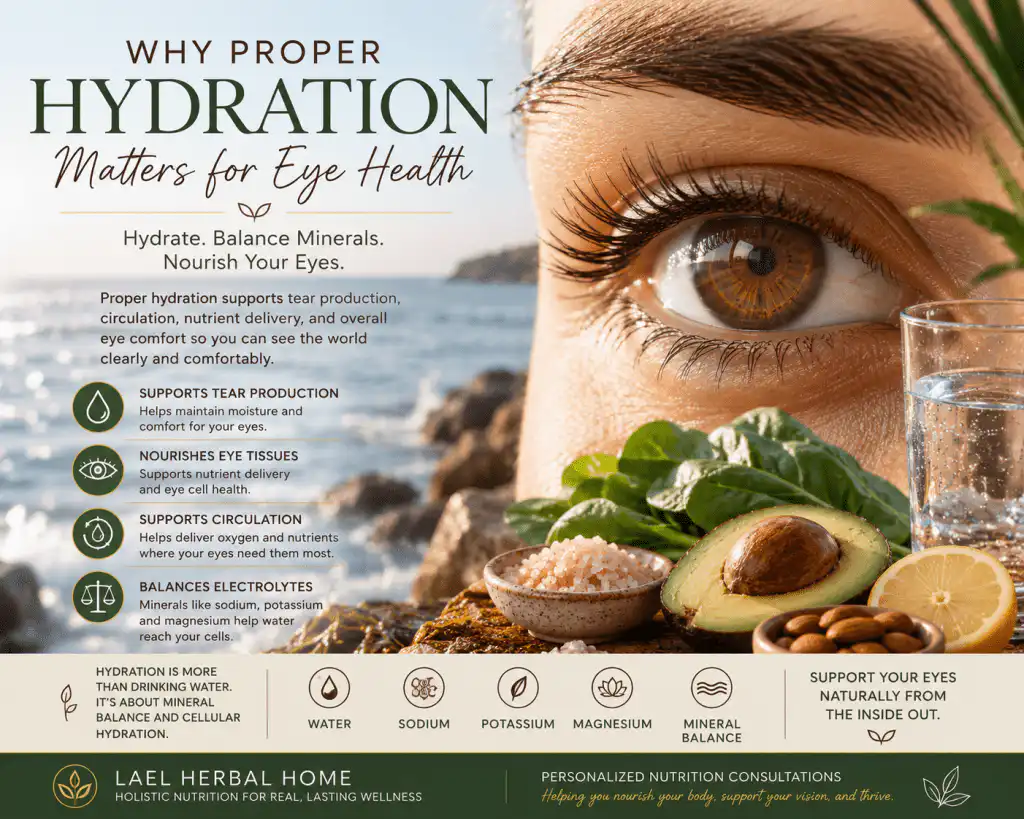
Hydration is about far more than simply drinking water. Every cell in the body depends on a balance of water, minerals, and electrolytes to function properly—including the eyes. Because the eyes are constantly exposed to light, environmental stressors, and daily use, maintaining proper hydration can help support tear production, comfort, circulation, and overall visual function.
What Does It Mean to Be Hydrated?
Many people assume hydration is simply a matter of drinking more water. In reality, hydration occurs when water is properly absorbed, transported, and utilized by the body’s cells.
This process depends on electrolytes and minerals such as sodium, potassium, magnesium, calcium, and chloride. Without adequate mineral balance, water may not be efficiently carried into cells where it is needed most.
As a result, a person can consume large amounts of water yet still experience symptoms associated with poor hydration.
The Role of Sodium in Cellular Hydration
Sodium is often misunderstood. While excessive sodium intake from highly processed foods can contribute to health concerns, sodium itself is an essential mineral required for life.
One of sodium’s primary functions is helping regulate fluid balance within the body. Sodium works alongside potassium to help move water into and out of cells, supporting proper hydration at the cellular level.
Without adequate sodium, the body may struggle to maintain fluid balance, even when water intake appears sufficient.
Sources of naturally occurring sodium and minerals include:
- Unrefined sea salt
- Celtic sea salt
- Homemade mineral-rich broths
- Seafood
- Naturally occurring sodium found in whole foods
How Hydration Supports Eye Health
The eyes are among the most metabolically active tissues in the body. Every day they are exposed to light, environmental pollutants, screen time, and normal wear and tear.
Proper hydration helps support:
- Tear production
- Eye surface moisture
- Nutrient delivery to eye tissues
- Healthy circulation
- Visual comfort
When hydration status is compromised, some individuals may notice symptoms such as:
- Dry eyes
- Eye fatigue
- Irritation
- Burning sensations
- Increased discomfort during prolonged screen use
Nutrients That Support Healthy Hydration
Water is important, but hydration also depends on obtaining adequate minerals and electrolytes through the diet.
Foods that may help support hydration include:
- Cucumbers
- Watermelon
- Citrus fruits
- Leafy greens
- Avocados
- Coconut water
- Homemade mineral broths
These foods provide water along with valuable nutrients that help the body maintain proper fluid balance.
Supporting Healthy Vision Through Proper Hydration
Hydration is not simply about drinking more water—it’s about maintaining the mineral balance necessary for water to reach and nourish the body’s cells. By supporting electrolyte balance through a nutrient-dense diet, you can help support healthy tear production, visual comfort, and overall eye health.
If you’re looking for personalized guidance, Lael Herbal Home offers Holistic Nutrition Consultations designed to help you build a plan that supports your unique health goals.