


Bloating is not always about how much you eat.
From stomach movement to intestinal gas, understand what your digestive system may be telling you.
Have you ever finished a perfectly normal meal, only to find yourself loosening your waistband an hour later?
Your abdomen feels tight, there’s pressure beneath your ribs or across your stomach, and suddenly you’re questioning everything you ate.
Was it the bread? The vegetables? Did you eat too much? Or was it something about how the foods were combined?
It’s natural to blame the food when bloating happens. But what if the problem isn’t necessarily how much you ate?
Bloating can occur even when you haven’t overeaten, and sometimes it happens without an excessive amount of intestinal gas.
To understand why, we need to look at what happens inside the digestive system, beginning before the food even reaches your stomach.
Digestion Begins Before the First Bite
The digestive system doesn’t wait until food reaches the stomach to begin working. The sight, smell, and anticipation of food stimulate nervous-system signals that prepare the body for digestion. Saliva production increases, and the stomach begins preparing for the incoming meal.
When you begin chewing, your teeth break food into smaller particles, making it easier for digestive juices to work on them. Saliva also contains enzymes that begin breaking down certain carbohydrates.
This is one reason eating slowly and chewing thoroughly matter. Rushing through a meal often means swallowing more air along with your food. Some of this air escapes through burping, but some may contribute to pressure farther along the digestive tract.
Once swallowed, food travels into the stomach, where muscular contractions mix it with stomach acid and digestive enzymes. The stomach then gradually releases its contents into the small intestine, where much of the digestion and absorption of nutrients takes place.
But how quickly food moves through these organs is just as important as how it is broken down.
Why Does Food Sometimes Feel Like It’s Sitting in Your Stomach?
Your digestive tract contains layers of smooth muscle that contract and relax in coordinated movements called gastrointestinal motility. These movements are regulated by nerves, hormones, and specialized cells that help the stomach and intestines communicate.
The stomach doesn’t simply empty whenever it contracts. It responds to information coming from the small intestine, which helps determine how quickly additional food should arrive.
For example, meals higher in fat generally remain in the stomach longer. When fat reaches the small intestine, digestive signals slow the stomach’s emptying to allow more time for processing nutrients. This is a normal response, not necessarily a digestive problem.
However, certain medications, thyroid dysfunction, diabetes-related nerve changes, and digestive disorders can interfere with normal movement.
Why does this create discomfort?
When the stomach empties unusually slowly, its contents remain there longer. This may contribute to upper abdominal pressure, prolonged fullness, nausea, or the sensation that food is sitting heavily long after a meal.
But not everyone who experiences these symptoms has delayed stomach emptying. Sometimes the stomach is functioning normally while the person experiences increased sensitivity to fullness.
And for many people, the discomfort doesn’t begin in the stomach at all. It develops farther along, where food meets the intestinal microbiome.
Why Do Certain Foods Produce So Much Gas?
Most nutrients are broken down and absorbed in the small intestine. However, some carbohydrates and fibers cannot be completely digested there. These continue into the large intestine, where trillions of microorganisms live.
Your intestinal bacteria perform an important job: they ferment certain food components that your own digestive enzymes cannot break down. During fermentation, gases such as hydrogen and carbon dioxide are produced. Some intestinal microorganisms also produce methane.
Fermentation is a natural and necessary process. It also creates beneficial compounds that help nourish the lining of the colon. So why does it sometimes cause discomfort?
The amount and type of food reaching the colon can influence how much gas is produced.
Why do beans, onions, and certain fruits cause discomfort?
Beans and lentils contain carbohydrates that human digestive enzymes cannot completely break down. Onions, garlic, and wheat contain fructans, which are also readily fermented by intestinal bacteria. Some fruits contain fructose in amounts that a particular person’s small intestine may not fully absorb.
Dairy products provide another example. Lactose requires an enzyme called lactase to be broken down properly. When someone produces insufficient lactase, undigested lactose moves into the colon, where bacteria ferment it. The unabsorbed lactose can also draw water into the intestine, contributing to bloating and sometimes diarrhea.
This explains why a food can be nutritious yet still produce discomfort for an individual. Two people may eat the same meal but respond differently because their digestive enzymes, intestinal bacteria, and absorption capacities aren’t identical.
Suddenly increasing fermentable fiber provides bacteria with more material to process, sometimes increasing gas production before the digestive system adjusts.
But producing gas and moving that gas comfortably through the intestines are two different processes.
What Happens When Gas Doesn’t Move Comfortably?
The intestinal muscles continually contract to mix and propel digestive contents forward. These movements help transport gas toward the rectum, where it can eventually leave the body.
When intestinal movement becomes less effective, gas may take longer to travel through the bowel. Constipation can contribute to this problem.
As stool remains in the colon, water continues to be absorbed from it. The stool becomes firmer and more difficult to pass, adding to the sensation of abdominal fullness.
Some people also experience difficulty relaxing the pelvic-floor muscles during bowel movements, which can interfere with the comfortable release of stool and gas. This helps explain why bloating sometimes improves after using the bathroom.
However, gas doesn’t have to become physically trapped for someone to feel bloated. The intestines are filled with nerves that monitor stretching, pressure, and movement. These nerves communicate constantly with the brain.
In some people, the digestive system becomes unusually sensitive to these sensations, a condition known as visceral hypersensitivity. Even an ordinary amount of intestinal gas can then create substantial discomfort.
The abdominal muscles and diaphragm may also respond differently to digestive sensations, sometimes causing visible abdominal distension without a significant increase in gas volume.
Stress and hormonal fluctuations can influence these responses. Nervous-system activity affects intestinal movement and how strongly pressure is perceived. Hormonal changes throughout the menstrual cycle can alter bowel habits and fluid retention.
Two people experiencing what appears to be the same symptom may have very different things happening inside their digestive systems.
Why Understanding Your Digestive Pattern Matters
If someone feels unusually full soon after beginning a meal, that tells us something different from someone who experiences abdominal pressure several hours later. If bloating regularly improves after a bowel movement, bowel function deserves attention. If it consistently follows particular foods, understanding how those foods are digested may provide useful clues.
This is why I encourage people to become more familiar with their digestion rather than automatically blaming every uncomfortable meal on the food itself.
Eating slowly, chewing thoroughly, staying hydrated, and maintaining comfortable bowel habits are useful foundations.
In traditional herbal medicine, we don’t select herbs simply because two people share the same symptom. We consider the nature of the discomfort and the specific actions of the plants.
Someone experiencing uncomfortable intestinal cramping may benefit from a different herbal approach than someone whose primary complaint is a heavy, sluggish-feeling stomach. Two familiar kitchen botanicals—fennel seed and ginger root—offer an especially interesting example.
Fennel Seed: Why Herbalists Have Long Used It for Gas and Cramping
Foeniculum vulgare
Picture someone who finishes a meal and begins experiencing waves of abdominal pressure. The discomfort shifts through the intestines, sometimes accompanied by rumbling, trapped gas, or cramping. This is the kind of digestive complaint for which fennel has traditionally been valued.
Fennel is classified as a carminative, meaning an aromatic herb traditionally used to ease the discomfort associated with intestinal gas. It is also an antispasmodic, used traditionally to relieve uncomfortable muscular spasms.
Those actions are closely connected. Intestinal muscles must contract to move contents forward, but when contractions become uncomfortable or spasmodic, gripping pain or pressure can result. Fennel has a particular affinity in traditional herbalism for this kind of discomfort.
Its aromatic constituents are associated with relaxing effects on intestinal smooth muscle, helping explain why fennel has historically been used when gas is accompanied by cramping.
Fennel’s traditional role isn’t to stop fermentation or eliminate all intestinal gas. It is associated with making ordinary digestive activity more comfortable.
Herbalists have also historically included fennel in some strongly laxative formulas because stimulating laxative herbs can cause intestinal gripping and fennel has been used to soften that experience.
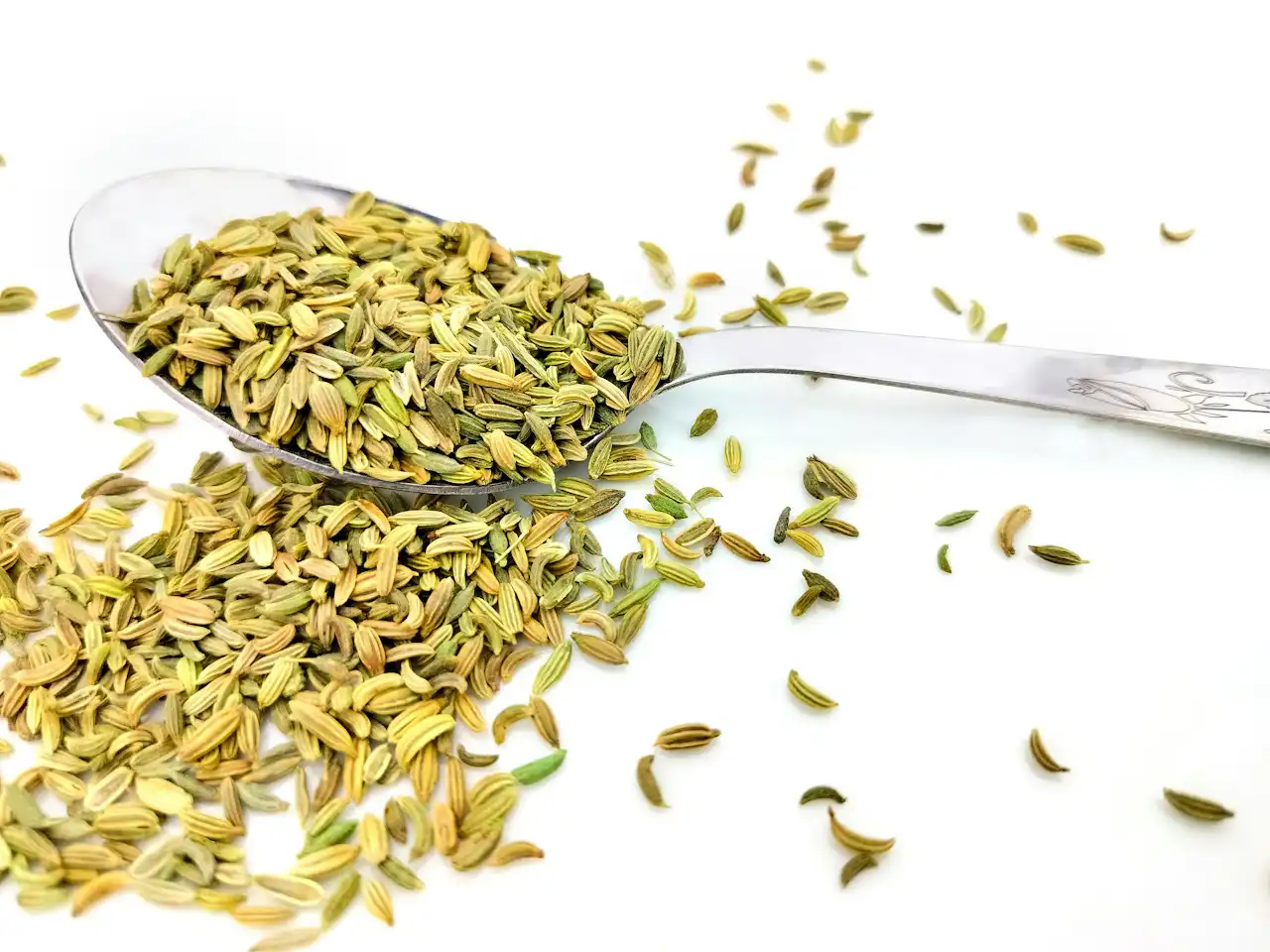
The so-called seeds are actually dried fennel fruits, containing fragrant compounds including trans-anethole and fenchone. Lightly crushing the fruits exposes the aromatic material to water, and covering the infusion helps keep those constituents from escaping with steam.
This is one way preparation affects the finished remedy. Fennel is naturally sweet, aromatic, and gently warming—and its traditional strengths center on gas, pressure, and spasmodic intestinal discomfort.
But what if the main complaint is nausea, poor appetite, or a heavy sensation beginning higher in the stomach? That brings us to ginger.
Ginger Root: Why Warming Herbs Have a Place in Digestive Care
Zingiber officinale
Imagine finishing a meal and feeling as though it is sitting heavily in your upper abdomen. You’re not necessarily experiencing sharp cramps or struggling to pass gas. Instead, there’s lingering fullness, perhaps with nausea or a lack of appetite.
Traditional herbalists have long associated ginger with this digestive pattern. Ginger is a warming, pungent digestive stimulant as well as a carminative and antiemetic.
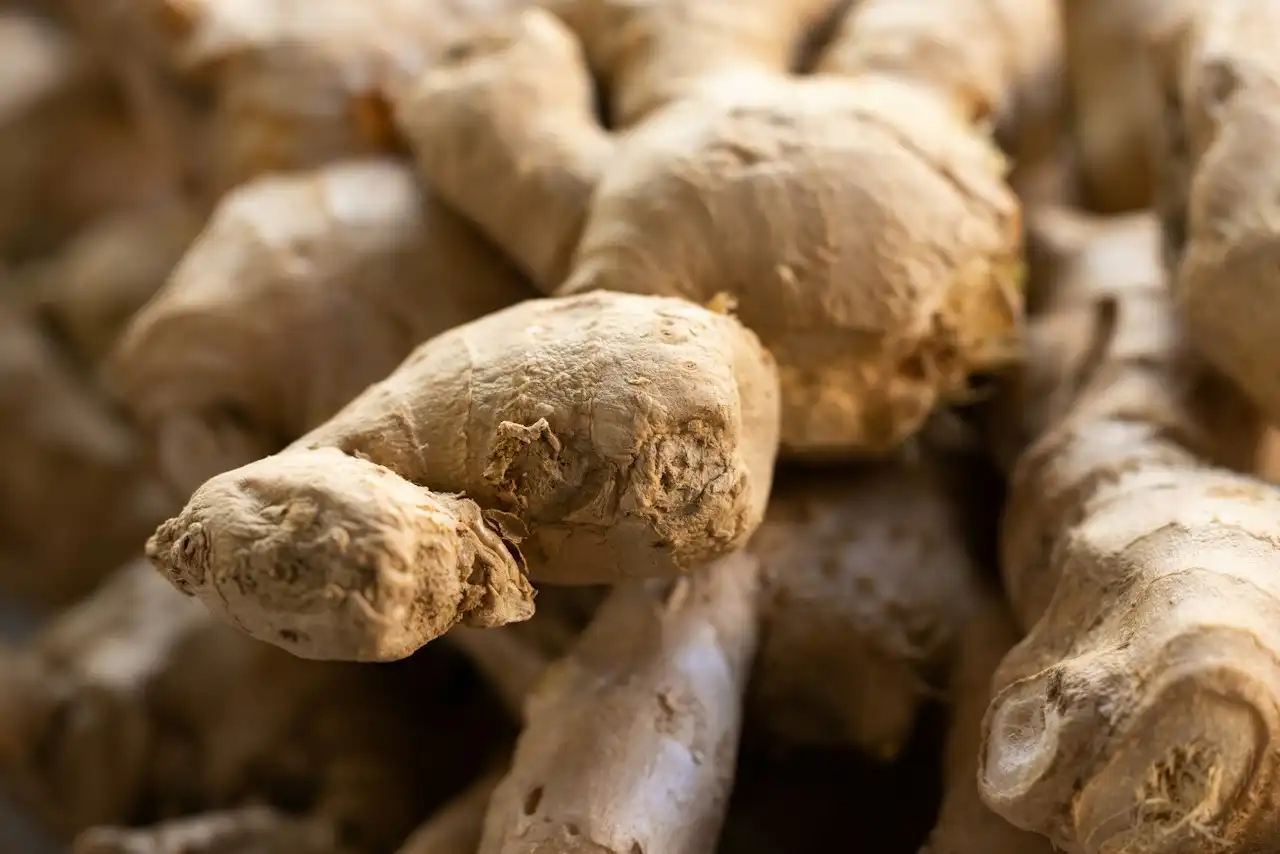
The medicinal part is the rhizome, an underground stem commonly called ginger root. Gingerols and shogaols contribute its characteristic pungency and warming sensation.
The stomach depends on coordinated contractions to mix food and release its contents into the small intestine. Ginger has traditionally been used to encourage digestive activity and appetite, particularly when a meal feels heavy or slow to settle.
In herbal energetics, warming describes the plant’s pungency and traditional stimulating nature—not a literal rise in stomach temperature. Dried ginger is generally considered more heating than fresh ginger in traditional practice.
Ginger is not necessarily suited to every person. Someone already experiencing burning acidity or irritation may find its pungency uncomfortable.
While ginger shares fennel’s carminative qualities, it brings a stronger stimulating character. The two plants therefore do not simply duplicate each other.
What Makes Fennel and Ginger a Complementary Pair?
Fennel and ginger have something in common: both are aromatic carminatives traditionally used for digestive discomfort. But their emphases are distinct.
Fennel is particularly valued where gas is accompanied by intestinal tension or cramping. Ginger brings warming stimulation traditionally associated with appetite, nausea, and a heavy-feeling stomach.
Supporting coordinated digestive movement and easing uncomfortable muscular spasms are compatible goals. The digestive tract needs effective movement without continual discomfort.
Their flavors balance too: fennel’s natural sweetness softens ginger’s pungency, while ginger adds warmth to fennel’s aromatic character.
Neither herb addresses every cause of bloating. But understanding their individual traditional actions makes the pairing more meaningful than simply calling both herbs good for digestion.
The Conversations That Inspired FennGinga™
As a certified herbalist, I spend a great deal of time talking with people about their health. One concern that seems to come up repeatedly in conversations within my community is bloating.
What stands out to me is not only how common the discomfort seems to be, but how many people are unsure what’s causing it.
When you don’t understand why your stomach feels uncomfortable, it’s easy to begin questioning every meal or assuming certain foods must be the problem.
Those conversations are part of why I wanted to write this article. I believe people deserve to understand what their bodies are doing. That understanding helps us recognize patterns and make thoughtful decisions about wellness.
The conversations also inspired me to put my herbal knowledge into a simple preparation built around two botanicals I value for their digestive actions.
That’s how FennGinga™ came to be.
I created FennGinga™ with lightly crushed organic fennel seeds and organic dried ginger root. I chose to keep the formula simple so that every ingredient has a clear purpose.
FennGinga™ is a small-batch herbal infusion I designed to be enjoyed before meals as part of a mindful digestive routine.
Explore FennGinga™ — organic fennel & ginger tea for bloating and digestive comfort.
It grew out of a genuine concern I kept hearing from my community—not the belief that everyone with bloating needs the same preparation. Understanding the cause of discomfort remains the best place to begin.

A Different Way to Think About Bloating
The next time you experience bloating, pay attention to more than what was on your plate. Notice when the discomfort begins, whether it involves fullness or cramping, how your bowel movements have been, and whether a particular pattern keeps appearing.
Persistent or worsening symptoms, particularly with significant pain, vomiting, bleeding, or unexplained weight loss, deserve further investigation.
Digestive wellness isn’t about finding one remedy for every uncomfortable stomach. It’s about understanding what is happening within the body and choosing support that makes sense for the individual.
That is the approach I value in traditional herbalism, and it is the approach I bring to Lael Herbal Home.
Michelle La’el
Certified Herbalist & Certified Holistic Nutrition Consultant
Lael Herbal Home · Small Batch · Herbal · Intentional