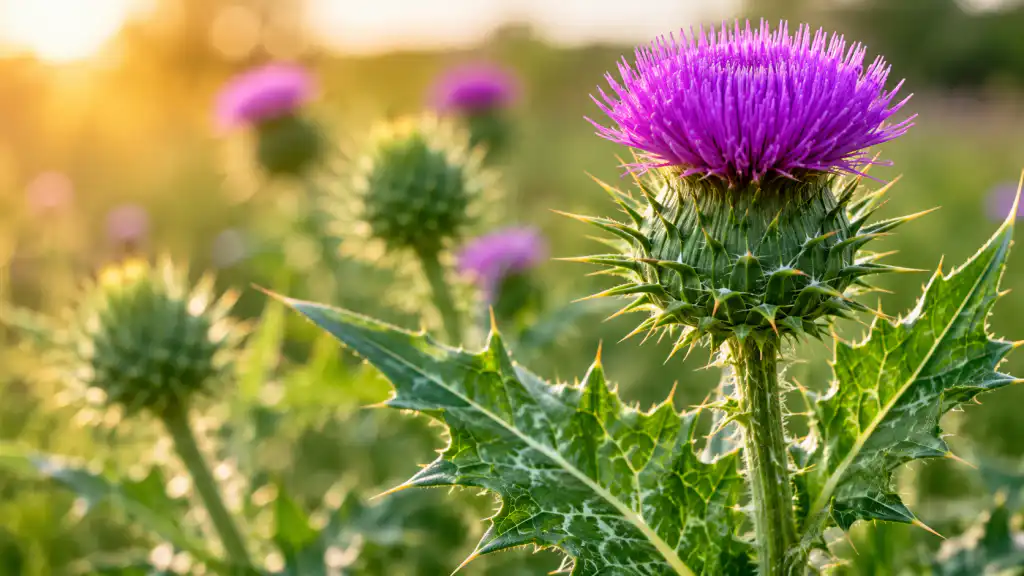
Meet Milk Thistle: A Plant That Offers More Than One Compound
One of the biggest mistakes we make when learning about herbs is assuming they’re valuable because of one “active ingredient.”
Plants don’t work that way.
Milk thistle is a perfect example. While silymarin has received most of the attention from researchers and supplement companies, it’s only one part of a remarkably complex plant. Like many medicinal herbs, milk thistle contains hundreds of naturally occurring compounds that exist together in the balance G-d created.
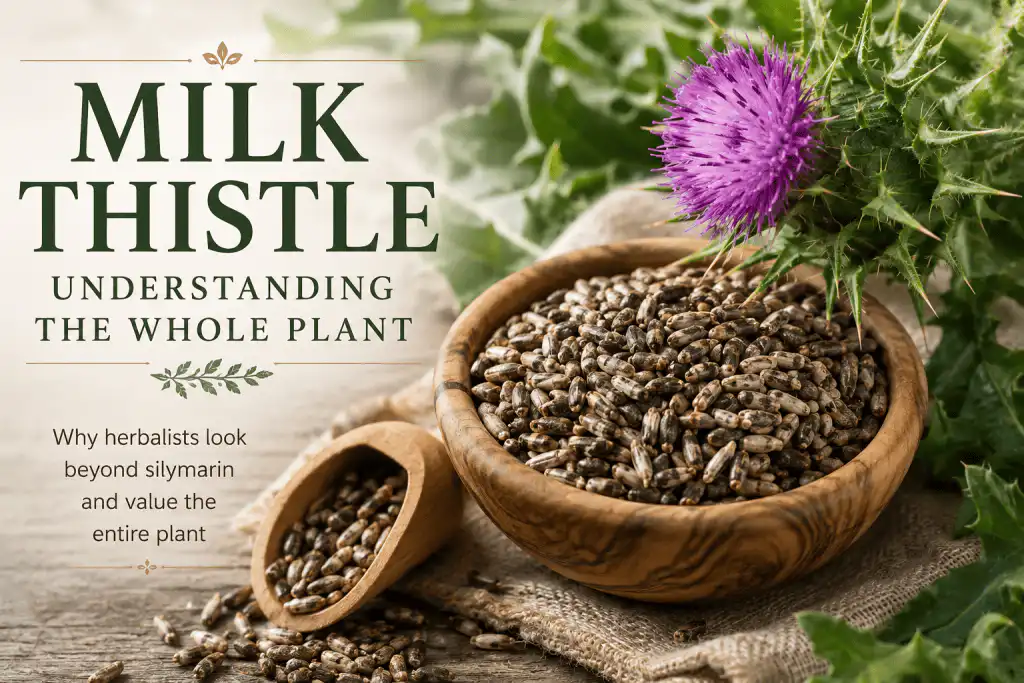
While every part of the plant has been used in one way or another throughout history, the seeds have always been considered the primary medicinal part. The leaves, roots, and flower heads have also been enjoyed as food, reminding us that milk thistle has long been appreciated as both nourishment and medicine.
The Seeds: The Most Valued Part
If you’ve ever purchased milk thistle capsules, chances are they were made from the seeds.
For centuries, herbalists have relied primarily on the mature seeds because they’re naturally rich in flavonolignans, healthy fatty acids, proteins, vitamin E, sterols, fiber, and numerous antioxidant compounds. These seeds are where most commercial extracts come from, but they can also be freshly ground and added to smoothies, oatmeal, yogurt, or incorporated into baked goods.
Traditionally, the seeds have been used to support healthy liver function, normal bile production, digestion, and overall vitality. David Hoffmann refers to milk thistle as one of the premier liver herbs in Western herbalism, while herbalists like Natalie Apelian continue to emphasize the value of working with the whole plant whenever appropriate rather than viewing one isolated constituent as the entire herb.
The Leaves
Although the seeds receive most of the attention, the leaves are also edible.
Once the sharp spines are removed, the young leaves can be eaten raw in salads or lightly cooked like spinach. Historically, they were valued as a nourishing spring vegetable that provided chlorophyll, fiber, minerals, and naturally bitter compounds that gently prepare the digestive system for food.
The Roots
Milk thistle roots have also been eaten, especially when harvested while young.
Prepared much like salsify or other root vegetables, they were appreciated more as food than concentrated medicine. While they don’t contain the same concentration of constituents as the seeds, they remind us that traditional cultures often found ways to use nearly every part of the plant.
The Flower Heads
Even the immature flower buds have traditionally been prepared much like globe artichokes, which isn’t surprising considering both belong to the Asteraceae family.
Although the flower heads are not considered the primary medicinal portion of the plant, their historical use demonstrates that milk thistle was once appreciated as a versatile food as well as a medicinal herb.
The Chemistry of the Whole Plant
Understanding the different parts of milk thistle is only part of the story.
To truly appreciate why this herb has remained one of the foundations of Western herbalism, we need to look at what G-d placed inside the plant itself.
Every milk thistle seed contains an intricate collection of naturally occurring compounds. Some have been extensively researched, while others are only beginning to be understood. Rather than functioning independently, these constituents exist together, each contributing something unique to the plant’s overall character.
This is one of the reasons I encourage people to look beyond the supplement label. When we reduce milk thistle to a single constituent like silymarin, we overlook the remarkable complexity of the plant G-d designed.
Flavonolignans (The Silymarin Complex)
Includes: Silybin (Silibinin), Isosilybin, Silychristin, and Silydianin.
These compounds are the most widely studied constituents of milk thistle and are largely responsible for its reputation as a liver-supportive herb. Traditionally, herbalists have valued them for supporting healthy liver cells, encouraging normal bile production, and helping protect tissues from everyday oxidative stress.
Traditionally supports:
- Liver
- Gallbladder
- Healthy bile production
- Natural detoxification pathways
- Digestive function
Flavonoids
Flavonoids are naturally occurring antioxidants found throughout the plant kingdom. In milk thistle, they complement the work of other constituents by helping protect cells from oxidative stress while supporting the body’s natural defense systems.
Traditionally supports:
- Cardiovascular system
- Immune function
- Healthy inflammatory response
- Cellular health
Healthy Fatty Acids
Milk thistle seeds naturally contain linoleic and oleic acids, two fatty acids that contribute to the nutritional value of the seed.
Healthy fats are essential for maintaining flexible cell membranes and play important roles throughout the body.
Traditionally supports:
- Brain and nervous system
- Skin
- Cellular integrity
- Cardiovascular health
Vitamin E (Tocopherols)
Milk thistle naturally contains vitamin E, one of the body’s important fat-soluble antioxidants.
Rather than acting alone, it works alongside the plant’s other antioxidant compounds, demonstrating how G-d designed plants with multiple layers of protection rather than relying on a single constituent.
Traditionally supports:
- Skin
- Eyes
- Cardiovascular health
- Immune system
- Cellular protection
Plant Sterols
Milk thistle contains naturally occurring plant sterols, including beta-sitosterol.
These compounds have traditionally been appreciated for supporting healthy cholesterol metabolism already within normal ranges while also contributing to overall cardiovascular wellness.
Traditionally supports:
- Cardiovascular system
- Healthy cholesterol metabolism
- Prostate health
- Immune function
Proteins & Amino Acids
Although milk thistle isn’t consumed primarily as a protein source, its seeds naturally contain proteins and amino acids that contribute to their nutritional profile.
This serves as another reminder that milk thistle has traditionally been viewed as both nourishment and medicine.
Traditionally supports:
- Tissue repair
- Muscle maintenance
- Enzyme production
- Overall nutrition
Fiber
When the whole seed is consumed rather than an isolated extract, it also provides dietary fiber.
Fiber nourishes beneficial gut bacteria, supports bowel regularity, and contributes to healthy digestion.
Traditionally supports:
- Digestive system
- Gut microbiome
- Healthy bowel function
- Satiety
Bitter Compounds
Milk thistle naturally contains bitter constituents, something herbalists have appreciated for centuries.
Bitters stimulate taste receptors on the tongue, signaling the digestive system to prepare for a meal. This encourages healthy digestive secretions, stomach acid production, and bile flow long before food reaches the intestines.
Traditionally supports:
- Digestive system
- Healthy appetite
- Stomach acid production
- Gallbladder function
- Healthy bile flow
Minerals
Milk thistle naturally contains calcium, magnesium, potassium, phosphorus, and trace minerals, with concentrations varying depending on the soil where it was grown.
Although it shouldn’t be viewed as a primary mineral supplement, these nutrients contribute to the plant’s overall nutritional value.
Traditionally supports:
- Bones
- Muscles
- Nervous system
- Fluid balance
- Energy metabolism
More Than the Sum of Its Parts
When you step back and appreciate milk thistle as a whole, it’s easy to understand why generations of herbalists respected it long before anyone isolated silymarin.
The flavonolignans support the liver.
The bitters prepare the digestive system.
The healthy fats nourish cell membranes.
The flavonoids and vitamin E contribute antioxidant protection.
The fiber supports the gut.
The sterols contribute to cardiovascular wellness.
Together, these compounds paint a much bigger picture than any single ingredient listed on the front of a supplement bottle.
Perhaps one of the greatest lessons milk thistle teaches us is this: G-d didn’t create this plant around one compound. He created an extraordinarily complex medicinal plant, with hundreds of naturally occurring constituents working together in ways we’re still discovering today.
How Herbalists Traditionally Use Milk Thistle
While milk thistle is best known for supporting the liver, traditional herbalists rarely think about the liver in isolation. The liver works closely with the gallbladder, digestive tract, and the body’s natural elimination pathways, which is why milk thistle has traditionally been included in formulas designed to support overall digestive wellness.
Herbalists have traditionally used milk thistle to support:
- Healthy liver function
- Normal bile production and flow
- Gallbladder health
- Fat digestion
- Digestive comfort
- The body’s natural detoxification processes
- Protection from everyday oxidative stress
- Overall vitality and resilience
One of the things I appreciate most about traditional herbalism is that it focuses on supporting normal body function rather than chasing symptoms. Instead of asking, “What herb treats this condition?” herbalists ask, “How can we best support the systems that are already working to keep the body healthy?”
Herbs Commonly Paired With Milk Thistle
One of the biggest differences between herbalism and modern supplementation is that herbalists rarely rely on a single herb.
Instead, herbs are thoughtfully combined so they complement one another.
Depending on the individual’s needs, milk thistle is often paired with:
Dandelion Root
Traditionally used to support healthy bile production and digestion while complementing milk thistle’s liver-supportive properties.
Artichoke Leaf
Often included to support fat digestion, healthy cholesterol metabolism already within normal ranges, and digestive comfort.
Burdock Root
A traditional alterative herb that has long been used to support the body’s natural elimination pathways and overall wellness.
Yellow Dock Root
Frequently paired with digestive formulas where healthy nutrient absorption and digestive function are a priority.
Ginger
Added to gently warm digestion while helping promote digestive comfort.
Turmeric
A popular companion herb used to support a healthy inflammatory response and overall wellness.
Schisandra Berry
Highly regarded in Traditional Chinese Medicine for supporting resilience and liver health, making it a natural complement to milk thistle.
Every herbal formula should be built around the individual, which is why no single combination is appropriate for everyone.
Choosing a Milk Thistle Product
If you’ve ever shopped for milk thistle, you’ve probably noticed the overwhelming number of choices.
Capsules.
Liquid extracts.
Tinctures.
Whole seeds.
Standardized extracts.
Tea.
Each has advantages.
If your goal is to work with the whole plant, freshly ground seeds provide the complete spectrum of naturally occurring compounds, including healthy fats and fiber.
Standardized extracts provide consistent amounts of silymarin and are often chosen when that specific constituent is the primary focus.
Tinctures are convenient, absorb quickly, and are easy to incorporate into daily routines.
Tea can certainly be enjoyed, but many of milk thistle’s best-known constituents are not highly water-soluble, making tea a milder preparation than ground seeds or extracts.
The “best” preparation ultimately depends on the individual and their goals.
My Perspective as a Herbalist
The longer I study medicinal plants, the more convinced I become that herbalism is about understanding relationships.
The relationship between herbs.
The relationship between body systems.
And ultimately, the relationship between the Creator and His creation.
Milk thistle reminds us that G-d didn’t create medicinal plants to revolve around a single molecule. He created an incredibly complex plant with hundreds of naturally occurring compounds, each contributing something unique to the whole.
Science has helped us better understand many of those compounds, and I believe that’s a wonderful thing. But I also believe we should be careful not to lose sight of the plant itself.
After all, people were benefiting from milk thistle long before anyone knew what silymarin was.
Final Thoughts
Milk thistle has earned its reputation as one of herbalism’s most respected plants, but not because it contains one remarkable compound.
It has earned that reputation because generations of herbalists observed how the whole plant supported the body when used thoughtfully and appropriately.
Whether you choose whole seeds, a tincture, or a standardized extract, I encourage you to look beyond the marketing on the bottle and spend time learning about the plant itself.
When we understand the herb, we begin to appreciate the incredible wisdom G-d placed within His creation.
Looking for Personalized Herbal Guidance?
No two people are exactly alike, and neither are their wellness goals.
If you’re looking for individualized herbal or nutrition guidance, I’d be honored to help you create a wellness plan tailored to your unique needs.
Book your consultation through Lael Herbal Home and let’s work together to support your health naturally.
Recommended Product
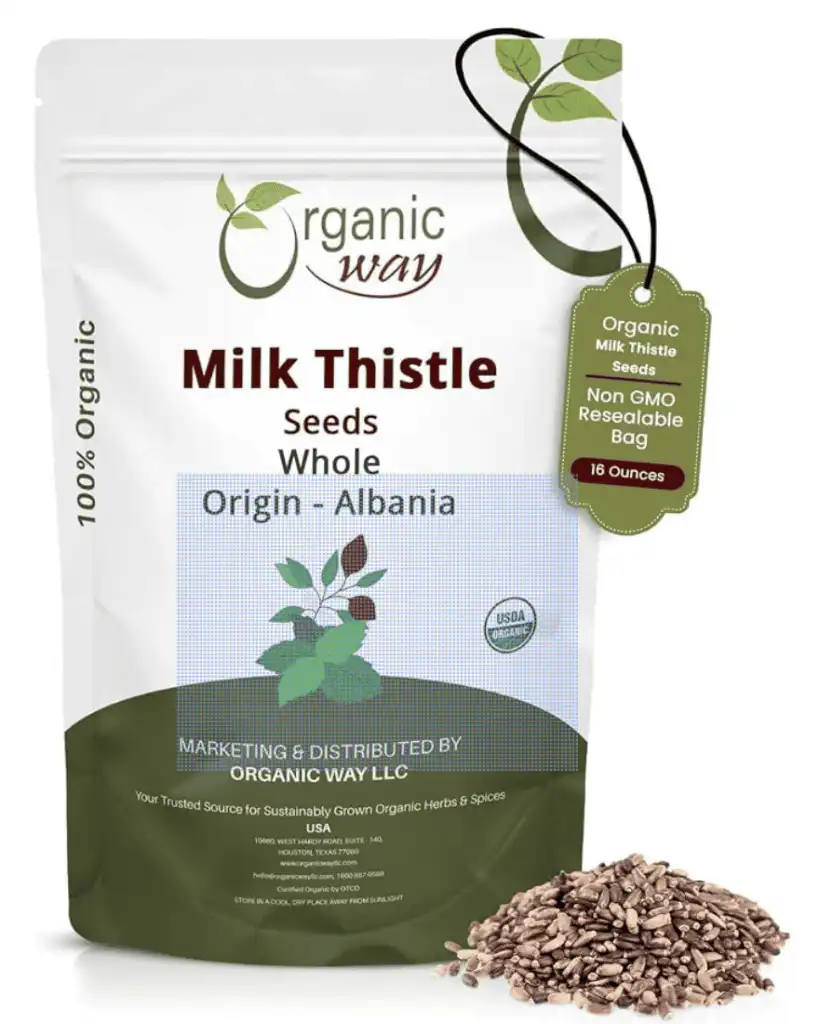
If you’d like to experience milk thistle in one of its most traditional forms, I recommend whole organic milk thistle seeds rather than focusing solely on standardized extracts.