
The Hidden Effects of Everyday Stress on Your Body
We all face stress. Whether it’s work, caring for our families, financial pressures, poor sleep, or simply trying to keep up with the demands of everyday life, our bodies are constantly responding to the world around us.
What many people don’t realize is that stress doesn’t just affect the mind—it can influence the entire body.
Stress itself isn’t the enemy. In fact, the stress response is one of the incredible ways the Creator designed our bodies to protect us. It helps us respond to challenges, stay alert, and react quickly when needed. The concern arises when stress becomes constant and our bodies don’t have enough time to rest, recover, and return to balance.
Over time, ongoing stress may affect far more than our mood. It can influence our sleep, digestion, hormone balance, energy levels, immune function, and overall sense of well-being. Sometimes these changes happen so gradually that we don’t immediately recognize the role stress may be playing.
Understanding how stress affects the body is the first step toward supporting it in a healthier way.
How Does Stress Affect the Body?
Your body was beautifully designed to respond to stress. When your brain perceives a stressful situation, it activates what’s known as the fight-or-flight response. Within seconds, stress hormones like cortisol and adrenaline are released, preparing your body to react.
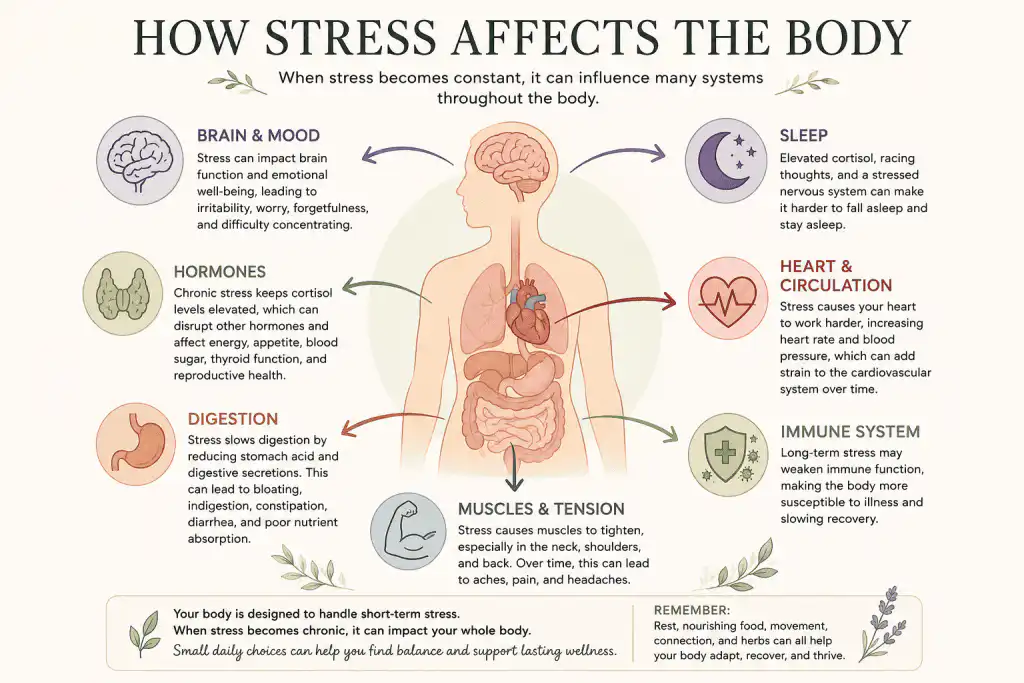
Your heart beats faster, your breathing becomes quicker, and glucose is released into the bloodstream to provide immediate energy. Blood flow is redirected toward your muscles and away from functions that aren’t considered essential for immediate survival, such as digestion and reproduction.
This response is incredibly helpful if you’re facing a real emergency.
The challenge is that our bodies don’t distinguish between running from danger and worrying about bills, caring for a sick family member, working long hours, navigating relationship challenges, or constantly feeling overwhelmed. To your body, chronic emotional stress can trigger many of the same physiological responses.
When this stress response remains activated day after day, it can begin affecting many different systems throughout the body.
Hormone Balance
One of the first systems affected is the endocrine (hormone) system.
Cortisol plays an important role in helping us respond to stress, but when levels remain elevated for long periods, it may influence other hormones throughout the body. This can affect appetite, energy levels, blood sugar regulation, menstrual cycles, reproductive hormones, and even thyroid function in some individuals.
Because hormones work together like an orchestra, when one hormone is consistently out of balance, others may also be affected.
Digestion
Have you ever noticed that you’re not hungry during a stressful situation—or that your stomach feels unsettled when you’re anxious?
That’s because digestion isn’t the body’s priority during stress.
When the fight-or-flight response is activated, blood flow is redirected away from the digestive tract. Digestive secretions may decrease, stomach emptying can change, and normal intestinal movement may be altered.
Over time, some people may notice:
- Bloating
- Indigestion
- Constipation or diarrhea
- Changes in appetite
- Increased food sensitivities
- Poor nutrient absorption
This is one reason why addressing stress can be an important part of supporting digestive wellness.
Blood Sugar & Cravings
Stress also affects how your body uses energy.
Cortisol encourages the release of glucose into the bloodstream so your muscles and brain have fuel to respond to perceived danger.
When stress becomes chronic, some people begin craving quick sources of energy, particularly foods high in sugar or refined carbohydrates. While these foods may provide temporary comfort, they can also contribute to energy crashes, creating a cycle that leaves many people feeling tired yet constantly reaching for another snack.
Sleep
Stress and sleep often influence one another.
When cortisol remains elevated later into the evening, it may become more difficult to relax and fall asleep. Poor sleep, in turn, may make the body more sensitive to stress the following day.
This cycle can continue until steps are taken to support both stress management and healthy sleep habits.
Immune Function
Your immune system also responds to chronic stress.
Short-term stress may temporarily enhance certain immune responses, but prolonged stress has been associated with changes in immune function that may reduce the body’s ability to respond effectively over time.
This is one reason many people notice they seem to get sick after long periods of ongoing stress.
Cardiovascular Health
During stress, your heart works harder to deliver oxygen and nutrients to your muscles.
Your heart rate increases, blood pressure may rise temporarily, and blood vessels adjust to help you respond quickly.
While these short-term changes are normal, consistently living under high levels of stress may place additional strain on the cardiovascular system over time. Supporting stress management is one of many lifestyle habits that contributes to overall heart health.
Inflammation
Inflammation is a normal part of the body’s healing process. However, chronic stress may contribute to changes in inflammatory signaling within the body.
Researchers continue to study how prolonged stress influences inflammation and how this relationship may affect long-term health.
Reducing unnecessary stress, eating a nutrient-dense diet, getting adequate sleep, and staying physically active all play important roles in supporting a healthy inflammatory response.
Emotional Well-Being
Stress doesn’t only affect the body—it can also affect how we think and feel.
Many people notice they become more irritable, emotionally reactive, forgetful, or have difficulty concentrating when stress becomes overwhelming.
That doesn’t mean something is “wrong” with you. It may simply be your body’s way of signaling that it needs more support, rest, and recovery.
Supporting Your Body During Times of Stress
Managing stress isn’t about pretending life is perfect or eliminating every challenge from your life. It’s about helping your body recover from the demands placed upon it.
While we can’t always control the circumstances around us, we can often control how we care for ourselves.
Some simple habits that can make a meaningful difference include:
- Prioritize restful, consistent sleep.
- Eat nourishing meals that include adequate protein, healthy fats, and a variety of whole foods.
- Stay well hydrated throughout the day.
- Spend time outdoors and get fresh air.
- Move your body in ways you enjoy.
- Reduce unnecessary screen time and constant stimulation when possible.
- Practice deep breathing, prayer, or quiet reflection.
- Build healthy boundaries and allow yourself time to rest.
- Make time for activities that bring you joy and help you reconnect with family, friends, or your faith.
These habits may seem simple, but over time they help create an environment where the body is better able to recover and maintain balance.
Herbs Traditionally Used to Support the Stress Response
For centuries, herbalists have turned to plants to help support the nervous system and the body’s natural response to occasional stress. While herbs aren’t a substitute for healthy sleep, nourishing food, movement, and other lifestyle habits, they can be valuable allies when used thoughtfully.
Here are a few herbs that are traditionally used to support stress and emotional well-being:
🌿 Ashwagandha (Withania somnifera)
Ashwagandha is one of the best-known adaptogenic herbs. Traditionally used in Ayurvedic medicine, it is valued for helping the body adapt to occasional stress while supporting resilience and overall vitality.
🌿 Tulsi (Holy Basil) (Ocimum tenuiflorum)
Often referred to as the “Queen of Herbs” in Ayurveda, tulsi is another adaptogen traditionally used to support emotional balance, mental clarity, and the body’s natural stress response.
🌱 Skullcap (Scutellaria lateriflora)
American skullcap has long been appreciated by Western herbalists for supporting the nervous system during times of tension. It is traditionally used to encourage relaxation while helping maintain mental clarity.
🌾 Milky Oats (Avena sativa)
Milky oat tops are considered a nourishing herb for the nervous system. Herbalists often recommend them for people who feel mentally or physically depleted after prolonged periods of stress.
🍋 Lemon Balm (Melissa officinalis)
Lemon balm is a gentle member of the mint family traditionally used to promote relaxation and support a calm mood. It’s commonly enjoyed as a tea or tincture.
🌸 Passionflower (Passiflora incarnata)
Passionflower has a long history of traditional use for supporting relaxation and helping quiet a busy mind, particularly during periods of occasional stress.
🌼 Chamomile (Matricaria chamomilla)
Chamomile is well known for its calming properties and is commonly used to support relaxation, especially as part of an evening routine.
🌹 Rose Petals (Rosaspp.)
Rose has been cherished for generations, not only for its beauty but also for its traditional use in supporting emotional well-being. Many herbalists consider rose a comforting herb that gently supports the heart and spirit.
✨ Saffron (Crocus sativus)
Saffron is one of the world’s most treasured botanicals. Traditionally used for centuries, it has been valued for supporting a positive mood and emotional wellness while adding its characteristic golden color to herbal preparations.
Remember…
No single herb is right for everyone. The best choice depends on your individual health history, current medications, stage of life, and wellness goals. What works well for one person may not be appropriate for another, which is why individualized herbal recommendations are so valuable.
Final Thoughts
Stress is part of life, but living in a constant state of stress doesn’t have to become your normal.
Supporting your health isn’t about finding a quick fix. It’s about consistently giving your body what it needs to adapt, recover, and function the way it was designed to.
Sometimes the smallest daily habits—rest, nourishing food, movement, and thoughtfully chosen herbs—can make the greatest difference over time.
Looking for Additional Herbal Support?
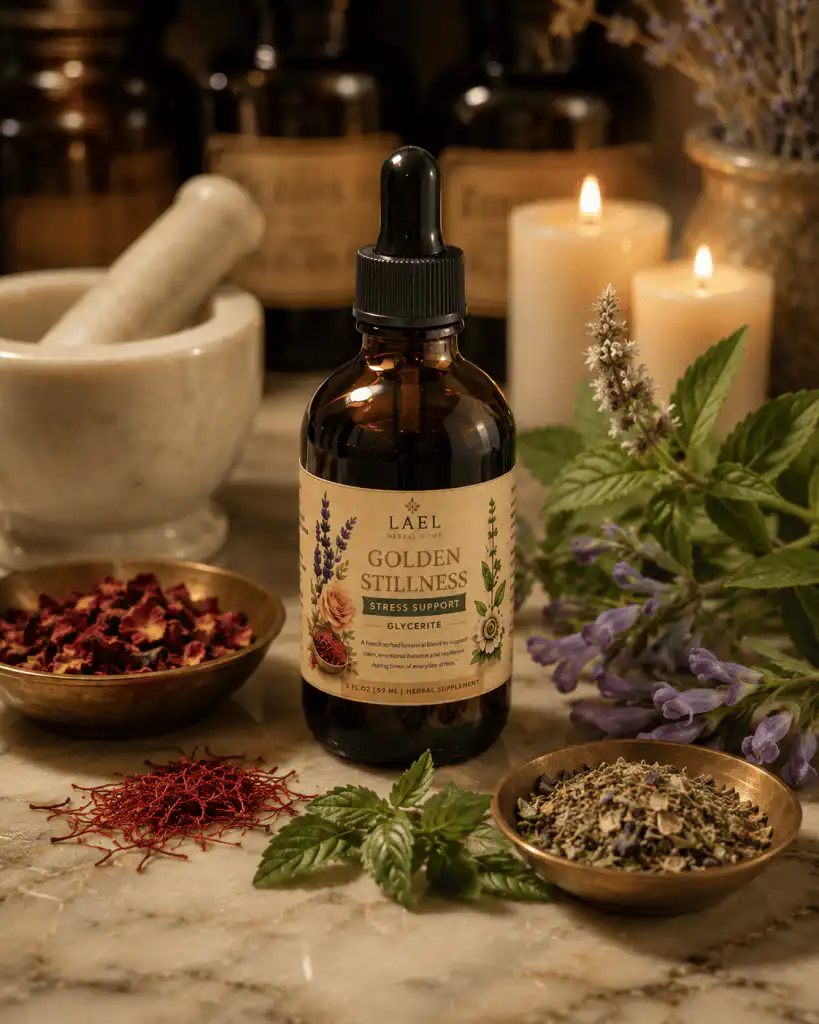
If you’re looking to incorporate herbs into your daily wellness routine, Golden Stillness™ Stress Support Glycerite was thoughtfully handcrafted with organic tulsi, organic skullcap, organic rose petals, and organic saffron. This alcohol-free formula is slowly macerated for nearly three months using organic coconut-derived vegetable glycerin and spring water, then carefully strained to create a beautiful, crystal-clear extract.
Whether you’re navigating a particularly demanding season of life or simply looking for gentle herbal support, Golden Stillness™ was created to complement a healthy lifestyle centered on nourishing food, restorative sleep, movement, and intentional self-care.
Explore Golden Stillness™ Stress Support Glycerite and learn more here:
If you’re experiencing persistent stress or would like individualized guidance on herbs, nutrition, and lifestyle, I’d be honored to work with you through a personalized consultation designed around your unique health goals.