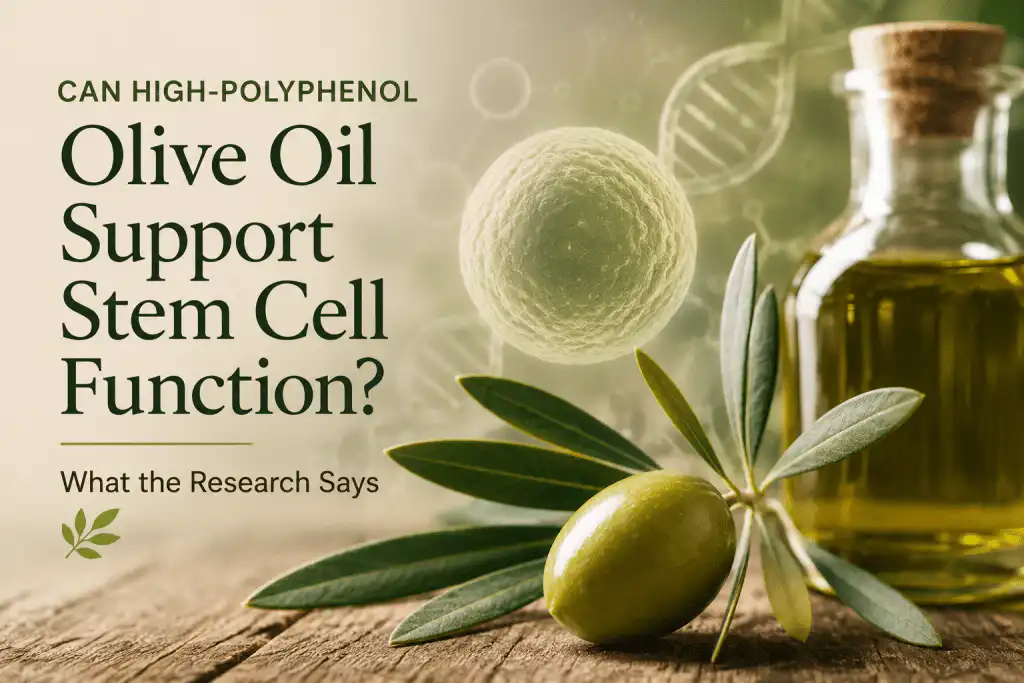

Stem cells are often described as the body’s internal repair system. These remarkable cells help maintain tissues, replace damaged cells, and play a role in the body’s ongoing renewal processes.
As interest in healthy aging and cellular wellness continues to grow, researchers have begun exploring an important question:
Can certain foods help support the environment in which stem cells function?
One of the most intriguing areas of research involves polyphenols, naturally occurring compounds found in plants. Among the most studied are the polyphenols found in high-quality extra virgin olive oil—particularly a compound known as hydroxytyrosol.
Stem Cells Need the Right Environment
Think of stem cells as seeds.
Even the healthiest seed cannot thrive in poor soil.
The same principle applies within the body. Stem cells function best when they are surrounded by an environment that supports cellular health, balanced inflammation, healthy mitochondrial function, and protection from excessive oxidative stress.
Over time, factors such as poor diet, environmental exposures, chronic stress, and aging can place additional strain on cellular systems.
This is where polyphenols become interesting.
Rather than creating stem cells, polyphenols appear to help support many of the biological pathways that stem cells rely upon to function effectively.
What Are Polyphenols?
Polyphenols are naturally occurring plant compounds found in foods such as:
- Olives
- Berries
- Green tea
- Herbs and spices
- Cacao
- Colorful fruits and vegetables
Plants produce these compounds to protect themselves from environmental stressors.
When consumed as part of a whole-food diet, polyphenols may help support the body’s own protective mechanisms as well.
Why Researchers Are Interested in Hydroxytyrosol
Hydroxytyrosol is one of the primary polyphenols found in olives and extra virgin olive oil.
What makes it particularly fascinating is its ability to influence several pathways associated with cellular protection and repair.
Research has shown that hydroxytyrosol may help support:
- Healthy antioxidant defenses
- Mitochondrial function
- Cellular resilience
- Healthy inflammatory balance
- Protection against oxidative stress
One pathway that has received significant attention is known as Nrf2.
Nrf2 is often referred to as the body’s “master antioxidant regulator” because it helps activate the production of the body’s own antioxidant and detoxification systems.
Interestingly, Nrf2 is also involved in pathways related to stem-cell maintenance and cellular repair.
Polyphenols and Stem Cell Activity
Emerging research suggests that polyphenols may support stem-cell function through several mechanisms.
Scientists have observed that polyphenols may help:
✓ Support stem-cell survival
✓ Reduce oxidative stress surrounding stem cells
✓ Improve mitochondrial health
✓ Support cellular communication pathways
✓ Promote cellular resilience
✓ Help maintain a healthy environment for tissue repair
In simple terms, stem cells appear to perform best when oxidative stress and inflammation are kept in balance.
Polyphenols may help create conditions that allow these cells to function more effectively.
This is one reason why many researchers are increasingly interested in the relationship between nutrition, polyphenols, and healthy aging.
Not All Olive Oils Contain the Same Amount of Polyphenols
Many people assume that all olive oils are similar.
In reality, polyphenol levels can vary dramatically.
Factors influencing polyphenol content include:
- Olive variety
- Climate and growing conditions
- Harvest timing
- Processing methods
- Freshness
- Storage conditions
Some olive oils may contain only modest levels of polyphenols, while others are specifically produced to maximize these valuable compounds.
For individuals interested in the potential benefits of olive polyphenols, sourcing matters.
What I Look For in a High-Polyphenol Olive Oil
When selecting an olive oil for wellness purposes, I personally look for:
✓ Organic certification
✓ Cold-pressed production
✓ Single-farm or single-origin sourcing
✓ Transparent harvesting practices
✓ High polyphenol content
✓ Fresh production
✓ Kosher certification when available
These factors help ensure both quality and traceability.
A High-Polyphenol Olive Oil That Stood Out to Me
Recently, I came across OLIVIE Plus 30X Organic High Polyphenol Extra Virgin Olive Oil.
What immediately caught my attention was its focus on naturally occurring hydroxytyrosol and polyphenol content.
Some notable features include:
- USDA Organic
- Kosher Certified
- Single-farm sourced
- Cold pressed
- Naturally rich in hydroxytyrosol and olive polyphenols
For individuals interested in cellular wellness, healthy aging, and the growing body of research surrounding polyphenols, it is certainly an interesting product worth exploring.
👉 [Organic High Polyphenol Extra Virgin Olive Oil]
Final Thoughts
The human body was designed with remarkable repair systems already in place.
While no food or supplement can replace the foundations of health, emerging research suggests that polyphenol-rich foods may help support the biological environment that allows those systems to function at their best.
High-polyphenol olive oil is more than just a source of healthy fat.
It is a concentrated source of some of nature’s most studied plant compounds—compounds that researchers continue to investigate for their role in cellular protection, resilience, healthy aging, and stem-cell support.
And that makes it far more interesting than the average bottle of olive oil on the grocery store shelf.
Join the Lael Herbal Home Community 🌿
Looking for clean foods, wellness education, recipes, herbal resources, and carefully selected products to support a healthier lifestyle?
Join my free community:
Lael Herbal Home WhatsApp Product Community Group
Michelle La’el
Certified Herbalist & Certified Holistic Nutrition Consultant
Lael Herbal Home