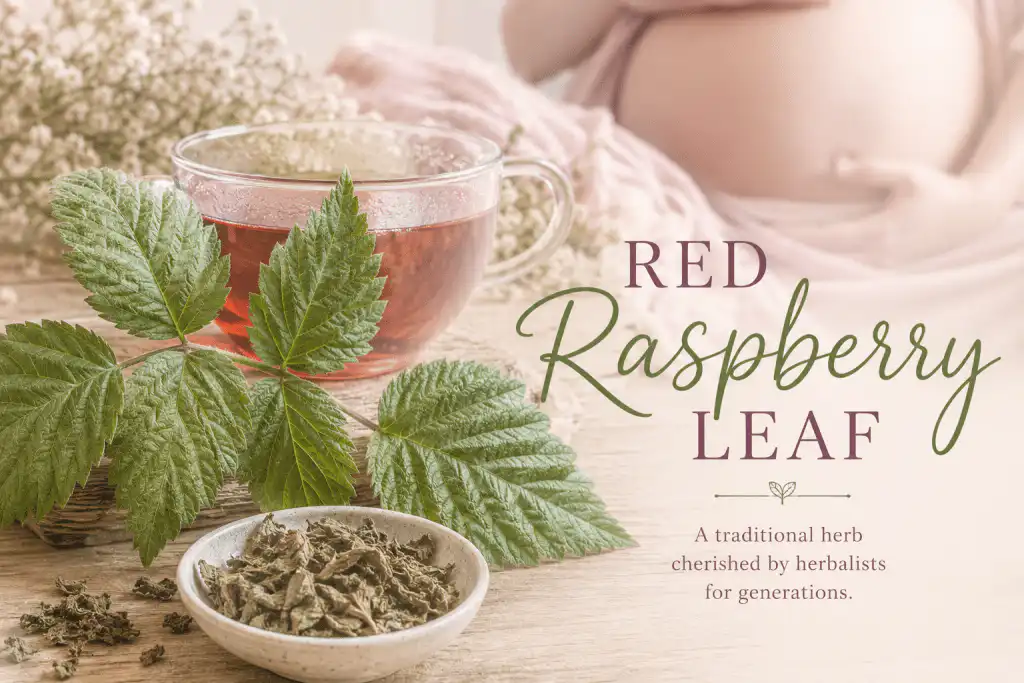
Among the many herbs associated with women’s wellness, few have earned the reputation of red raspberry leaf (Rubus idaeus).
For generations, herbalists, midwives, and traditional practitioners have valued raspberry leaf as one of the most important herbs for pregnancy and childbirth. Long before modern prenatal products existed, women turned to nourishing foods, rest, and herbal preparations to support themselves through pregnancy, labor, and recovery.
In Medical Herbalism, renowned herbalist David Hoffmann describes raspberry leaf as one of the most widely used herbs during pregnancy in Europe and discusses its long-standing role in traditional pregnancy care.
More Than Just a Tea
Most people recognize raspberry as a delicious fruit, but herbalists have historically been just as interested in the leaves of the plant.
The leaves are typically dried and prepared as a tea or infusion. Unlike many herbs that are used for short periods of time, raspberry leaf has traditionally been incorporated into longer-term wellness practices throughout pregnancy.
Its popularity stems from its reputation as a nourishing herb with a particular affinity for the female reproductive system.
What David Hoffmann Wrote About Raspberry Leaf
In Medical Herbalism, Hoffmann describes raspberry leaf as having a mildly astringent and tonic action.
He notes that traditional herbalists have valued raspberry leaf for:
- Supporting uterine tone
- Supporting pelvic tissues
- Supporting the female reproductive system
- Traditional use during pregnancy
- Traditional use before childbirth
- Traditional use after childbirth
- Supporting postpartum recovery
- Supporting milk production
- Traditional use for occasional nausea
- Traditional use for urinary tract wellness
Hoffmann also discusses raspberry leaf’s historical reputation as a herb with a particular affinity for the uterus.
According to traditional herbal literature, raspberry leaf was often viewed as both relaxing and toning in its action upon uterine tissues.
A Long History of Traditional Use
Raspberry leaf has been used for centuries in traditional herbal practice.
Hoffmann references a physician writing in a British medical journal who observed that many women who consumed raspberry leaf infusion experienced labor that was notably easier and less affected by muscular spasm.
Observations such as these contributed to raspberry leaf becoming one of the most respected pregnancy herbs in traditional European herbalism.
While experiences vary from woman to woman, the historical significance of raspberry leaf helps explain why it remains so widely discussed today.
Why Herbalists Valued Uterine Tonics
Traditional herbalists often categorized certain herbs as uterine tonics.
A tonic herb was not viewed as forcing the body to do something unnatural. Rather, it was believed to support normal function and resilience over time.
Raspberry leaf became one of the best-known examples of a traditional uterine tonic because of its long association with pregnancy, childbirth, and recovery.
For many herbalists, it represented an herb that worked through nourishment and support rather than stimulation.
Traditional Use Beyond Pregnancy
Although raspberry leaf is most commonly associated with pregnancy, its use was not limited to expecting mothers.
Historically, herbalists incorporated raspberry leaf into broader women’s wellness practices throughout various stages of life.
Its reputation as a nourishing herb contributed to its continued use long after childbirth.
This broader history helps explain why raspberry leaf remains one of the most beloved herbs in women’s herbal traditions.
Preparing Raspberry Leaf Tea
One of the most common ways to enjoy raspberry leaf is as a tea or infusion.
A traditional preparation often includes:
- 1 tablespoon dried raspberry leaf
- 8–12 ounces hot water
- Steep for 10–15 minutes
Some herbalists prefer longer infusions, allowing the leaves additional time to steep.
The flavor is often described as mild, earthy, and slightly reminiscent of black tea without the caffeine.
Herbs Are Part of a Larger Foundation
Traditional herbalists did not rely on herbs alone.
Pregnancy wellness was typically supported through:
- Nutrient-dense foods
- Adequate hydration
- Rest and recovery
- Physical activity appropriate to the individual
- Emotional support
- Herbal preparations
Raspberry leaf was often viewed as one part of a broader approach to supporting women throughout pregnancy and beyond.
Why Raspberry Leaf Continues to Be Discussed Today
Many herbs have come and gone from popularity over the years.
Raspberry leaf remains different.
Its long history of traditional use, extensive presence in herbal literature, and enduring reputation among herbalists and midwives have allowed it to remain one of the most frequently discussed herbs for pregnancy.
For many women, a cup of raspberry leaf tea is more than a beverage—it is a small ritual that connects them to generations of women who came before them.
Final Thoughts
Few herbs have developed a reputation in pregnancy herbalism comparable to red raspberry leaf.
As discussed by David Hoffmann in Medical Herbalism, raspberry leaf has a long history of traditional use for supporting women throughout pregnancy, childbirth, and postpartum recovery.
While every woman and every pregnancy is unique, raspberry leaf remains one of the most respected and enduring herbs in traditional women’s herbalism.
🌿 Free Pregnancy Wellness Resource
Looking to learn about additional traditional herbal teas that have been enjoyed throughout pregnancy?
Download my FREE guide:
5 Nourishing Herbal Teas for Pregnancy
Inside you’ll discover five traditional herbal teas that have been enjoyed for generations as part of a nourishing pregnancy wellness routine.
📥 Download your free copy here:
Disclaimer: This article is for educational purposes only and explores traditional herbal uses described in historical and contemporary herbal literature. It is not intended to diagnose, treat, cure, or prevent any disease. Always consult with your healthcare provider regarding your individual pregnancy and health needs.