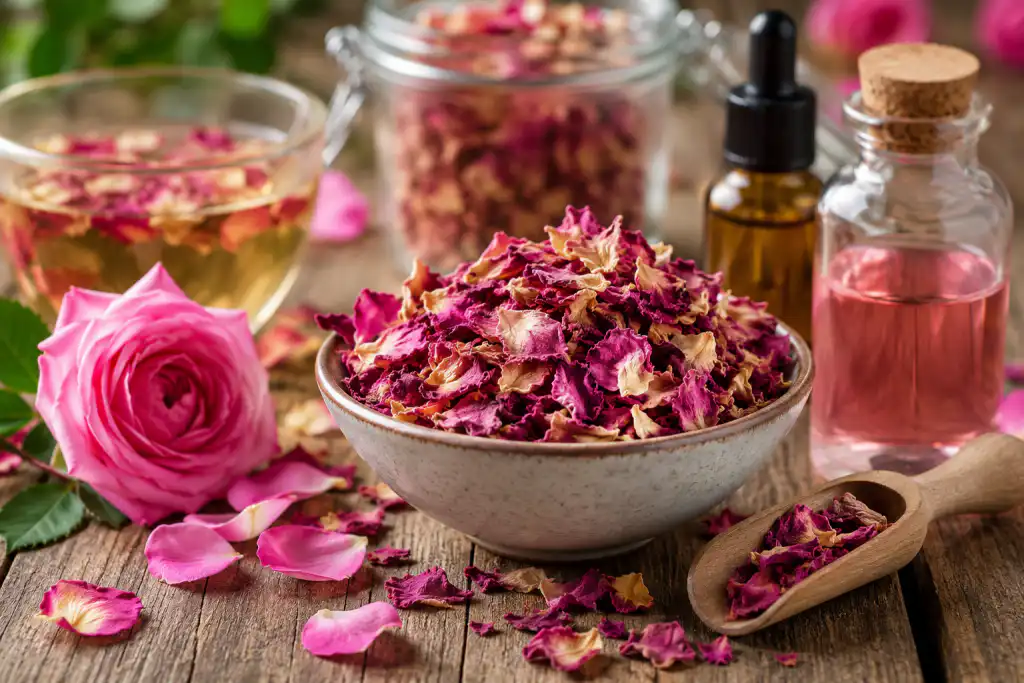
Roses are often associated with bouquets, gardens, anniversaries, and fragrant perfumes. Their beauty has made them one of the most recognizable flowers in the world. Yet beyond their ornamental appeal, rose petals have a rich history that extends far beyond the garden.
For centuries, rose petals have been incorporated into culinary traditions, botanical preparations, wellness practices, and skincare products. Their delicate flavor, pleasant aroma, and versatility have secured their place among the most beloved botanicals across many cultures.
A Rich History
The use of rose petals can be traced through the Middle East, Asia, and Europe, where they were incorporated into foods, infused into oils, enjoyed in beverages, and included in various botanical preparations.
Their gentle floral flavor pairs beautifully with ingredients such as:
- Chamomile
- Lemon Balm
- Spearmint
- Hibiscus
- Lavender
This versatility has allowed rose petals to remain a staple ingredient in both traditional and modern wellness practices.
Naturally Rich in Plant Compounds
Rose petals contain naturally occurring plant compounds, including polyphenols and flavonoids, which contribute to their value in botanical traditions.
In addition to their appealing fragrance and flavor, these compounds have helped maintain interest in roses as more than simply an ornamental flower.
Rose in Wellness Traditions
Throughout history, rose petals have been associated with:
- Emotional well-being
- Relaxation and calm
- Digestive comfort
- Skin wellness
- General nourishment
Their gentle nature has made them a popular addition to blends designed to create a sense of balance and enjoyment.
Beyond the Teacup
While rose petals are commonly enjoyed as an infusion, their uses extend far beyond a warm cup.
Rose petals can also be found in:
- Infused honey
- Jams and preserves
- Herbal vinegars
- Botanical syrups
- Infused oils
- Facial steams
- Bath products
- Botanical skincare preparations
- Desserts and baked goods
Their fragrance, flavor, and striking appearance have allowed rose petals to move effortlessly between the kitchen, apothecary, and garden.
Final Thoughts
Beneath their beauty lies a fascinating history that spans generations and cultures. Far more than a decorative flower, rose petals have played a meaningful role in culinary traditions, botanical preparations, and wellness practices for centuries.
Sometimes the most familiar plants have the most surprising stories to tell.
Interested in Learning More?
Plants often offer far more than what first meets the eye. Exploring traditional herbalism can reveal a deeper appreciation for the botanicals that have been valued across generations.
Visit the Lael Herbal Home blog for more educational articles on herbs, nutrition, and holistic wellness, or schedule a consultation for individualized guidance tailored to your unique wellness goals.
This article is intended for educational purposes only and is not intended to diagnose, treat, cure, or prevent any disease.