
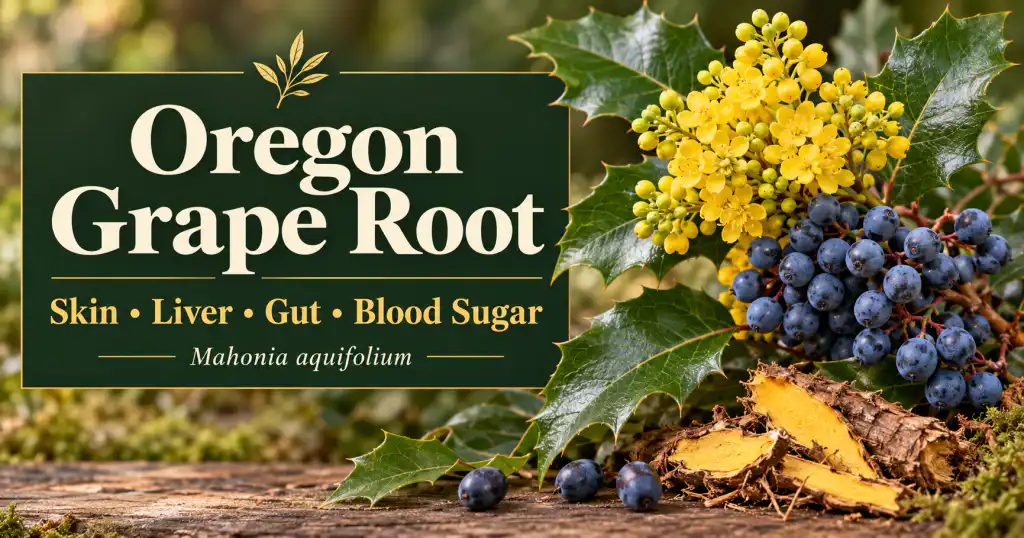
Oregon Grape Root
Skin • Liver • Gut • Blood Sugar
Why this bitter yellow root reaches far beyond the skin.
Sometimes the symptom showing on the outside is not where the problem began.
We see eczema and focus on the skin. We see high blood sugar and focus on glucose. We see an intestinal infection and focus on killing the organism. We see constipation and focus only on the bowel. But those symptoms can sit on top of deeper changes involving digestion, bile flow, metabolism, elimination, immunity, and circulation.
Oregon grape root has a long history of use for chronic skin conditions, sluggish digestion, liver and gallbladder support, intestinal infections, fungal problems, poor elimination, and metabolic concerns involving blood sugar and cholesterol. At first, those uses seem unrelated. The root itself gives us the first clue to why they are not.
Inside the Bright Yellow Root
Cut through Oregon grape root and its color is hard to miss. The root and rhizome contain several isoquinoline alkaloids, including berberine, berbamine, hydrastine, and oxycanthine.
Berberine is the best known today because of its use in blood-sugar and metabolic support, but Oregon grape was being used as a whole herb long before berberine became a popular supplement.
Its taste is just as distinctive as its color. Oregon grape is intensely bitter, and bitter compounds help stimulate digestive activity. They encourage digestive secretions and prepare the stomach, liver, gallbladder, and intestines for the work of digestion.
Oregon grape has therefore been described as a bitter tonic, cholagogue, and alterative. A cholagogue encourages bile production and movement. An alterative is an older herbal term for an herb used over time to improve elimination, tissue health, and the internal conditions associated with chronic problems. Those actions became especially important in its use for the skin.
Why Oregon Grape Became a Skin Herb
Oregon grape has a particularly strong history in Western herbalism for psoriasis, eczema, acne-like eruptions, persistent itching, rough or scaly skin, pustular eruptions, and other chronic dermatoses.
The skin was not always treated as an isolated surface problem. When chronic irritation appeared together with sluggish digestion, poor elimination, or signs of liver and gallbladder dysfunction, practitioners looked at the entire pattern rather than only what could be seen externally.
The alterative classification fits that approach. The goal was not simply to dry up a rash or make an eruption disappear temporarily. It was to improve the conditions affecting the tissue from underneath.
Modern research has also examined topical Mahonia aquifolium preparations for psoriasis, with clinical studies reporting improvement in psoriatic plaques. That gives us another perspective on a use that had already been established in herbal practice.
From the Liver and Gallbladder to the Skin
The liver produces bile, and the gallbladder stores and concentrates it before releasing it into the small intestine. Bile is essential for digesting fats and absorbing the fat-soluble vitamins A, D, E, and K.
Those nutrients have direct relevance to the skin. Vitamin A participates in normal skin-cell development and turnover. Vitamin D is involved in immune regulation and barrier function. Vitamin E helps protect cell membranes from oxidative damage. Dietary fats themselves provide building material for the lipid barrier that helps the skin hold moisture and protect the tissues underneath.
Poor fat digestion can therefore affect more than digestion alone. If fats and fat-soluble nutrients are not being absorbed efficiently, the skin may not receive the same nutritional support.
Bile also interacts with the intestinal microbiome. Intestinal bacteria modify bile acids, while bile acids help determine which organisms are able to thrive in the gut. That relationship influences digestion, the intestinal barrier, and immune activity.
When the gut environment becomes disturbed, microbial products and inflammatory signals can enter circulation and affect tissues elsewhere in the body. The skin is one of those tissues. This relationship is now often described as the gut-skin axis.
The liver also processes hormones, glucose, fats, medications, and many compounds absorbed from the digestive tract. Changes in insulin signaling, hormones, inflammation, and nutrient status can influence sebum production, acne, skin-cell growth, and inflammatory skin conditions.
That gives a much clearer explanation for why an herb associated with the liver, bile, digestion, and elimination also developed such a strong reputation for chronic skin problems.
Oregon Grape and the Intestinal Environment
The digestive tract contains enormous populations of bacteria, fungi, and other microorganisms. Many are beneficial and necessary. Problems arise when pathogenic organisms take hold or the normal balance becomes significantly disrupted.
Oregon grape has been used for infectious diarrhea, dysentery, intestinal microbial imbalance, and protozoal problems such as Giardia.
Berberine and related alkaloids have antibacterial, antifungal, and antiprotozoal activity. Herbal literature also describes Oregon grape in connection with Staphylococcus, Streptococcus, fungal conditions, urinary complaints, infected wounds, and gastrointestinal infections.
Externally, decoctions and other preparations have been used as washes for wounds, irritated skin, and fungal conditions. Internally, the root has been used when microbial problems involve the digestive or urinary systems.
Those are different applications, and the preparation should match the tissue and purpose rather than treating every infection as though it were the same.
Blood Sugar, Insulin, and Metabolic Health
The metabolic side of Oregon grape deserves attention because of its berberine content.
One of the pathways associated with berberine is AMPK, an enzyme involved in cellular energy regulation. AMPK influences how cells use fuel and plays a role in glucose uptake, insulin sensitivity, liver glucose production, and fat metabolism.
When insulin sensitivity declines, glucose does not move into cells as efficiently. The pancreas may produce more insulin to compensate, while the liver can continue producing or releasing glucose even when circulating levels are already high.
Berberine has been widely studied for blood-sugar regulation, insulin sensitivity, and lipid metabolism. Oregon grape naturally contains berberine within its broader alkaloid profile.
I am personally using Oregon grape root now and have been watching my blood sugar closely while using it. My readings have been excellent. That is my own experience, and every person responds differently, but it has certainly made me pay closer attention to this part of the herb.
Blood sugar and fat metabolism also overlap. When insulin resistance progresses, the liver may begin producing more triglycerides, fat can accumulate within liver tissue, and cholesterol patterns can change.
That is why elevated glucose, high triglycerides, fatty liver, abdominal fat, and altered cholesterol often show up together rather than as completely separate problems.
Berberine has been studied for effects on blood glucose, insulin sensitivity, triglycerides, LDL cholesterol, and broader lipid metabolism, which adds another layer to Oregon grape’s older association with liver and metabolic function.
Oregon Grape and Goldenseal
Oregon grape and goldenseal are frequently compared because both contain berberine. They share bitterness, antimicrobial activity, and some digestive applications, but they are not the same herb.
Goldenseal has traditionally had a stronger affinity for unhealthy mucous membranes, particularly tissues that are swollen, boggy, congested, or producing abnormal secretions.
Oregon grape is more strongly associated with liver and gallbladder function, alterative work, chronic skin conditions, digestion, and elimination.
Sustainability also matters. Goldenseal has experienced significant harvesting pressure and requires careful sourcing, while Oregon grape is much more abundant in many regions.
Shared chemistry does not make two plants interchangeable. Their tissue affinities and traditional uses are different enough that goldenseal deserves its own discussion.
Preparing Oregon Grape Root
The primary medicinal portions of Oregon grape are the root and rhizome.
Because roots are dense plant material, they are commonly prepared as a decoction, meaning they are simmered rather than treated like a delicate leaf or flower.
One of my materia medica references recommends approximately 1 to 2 teaspoons of Oregon grape root per cup of water, brought to a boil and then simmered for around 10 to 15 minutes.
Nicole Apelian gives a larger preparation using approximately ½ ounce of dried, crushed root in one quart of water, also simmered for 10 to 15 minutes.
Oregon grape can also be prepared as a tincture.
The taste is intensely bitter, but with a digestive bitter that taste serves a purpose. Bitter receptors begin responding before the herb has even moved very far into the digestive tract, which is one reason traditional bitters are often allowed to actually taste bitter rather than being completely disguised.
Using Oregon Grape With Respect
Oregon grape is a strong herb and should be used with an understanding of what it is doing.
Because of its berberine content, internal use is generally avoided during pregnancy and breastfeeding. Its glucose-lowering activity also needs to be considered when someone is already using medications or other substances that lower blood sugar.
Berberine can influence enzymes and transport proteins involved in the processing of certain medications, so interactions should be considered when medications are involved.
Oregon grape also stimulates bile, which means known bile-duct obstruction or significant gallbladder disease changes whether and how the herb should be used.
Thoughtful herbalism is not simply knowing what an herb can do. It is knowing when that herb actually fits the person and situation.
Looking Beneath the Symptom
Oregon grape root earned its place in herbal practice through generations of observation in conditions involving the skin, digestion, liver and gallbladder, microbes, and metabolism.
Its history becomes easier to understand when we stop looking only at the symptom in front of us and start asking what may be contributing to it underneath.
The symptom may be on the skin. The story may begin somewhere much deeper.
When the Symptom Is Only Part of the Story
If you are dealing with chronic skin trouble, digestive issues, blood-sugar imbalance, poor elimination, or several symptoms that never seem to fit neatly into one box, looking at each one separately may be missing the bigger picture.
My Whole-Person Consultation looks at the patterns connecting your nutrition, digestion, hormones, stress, lifestyle, symptoms, and overall health so we can build a support plan around you rather than chasing one symptom at a time.
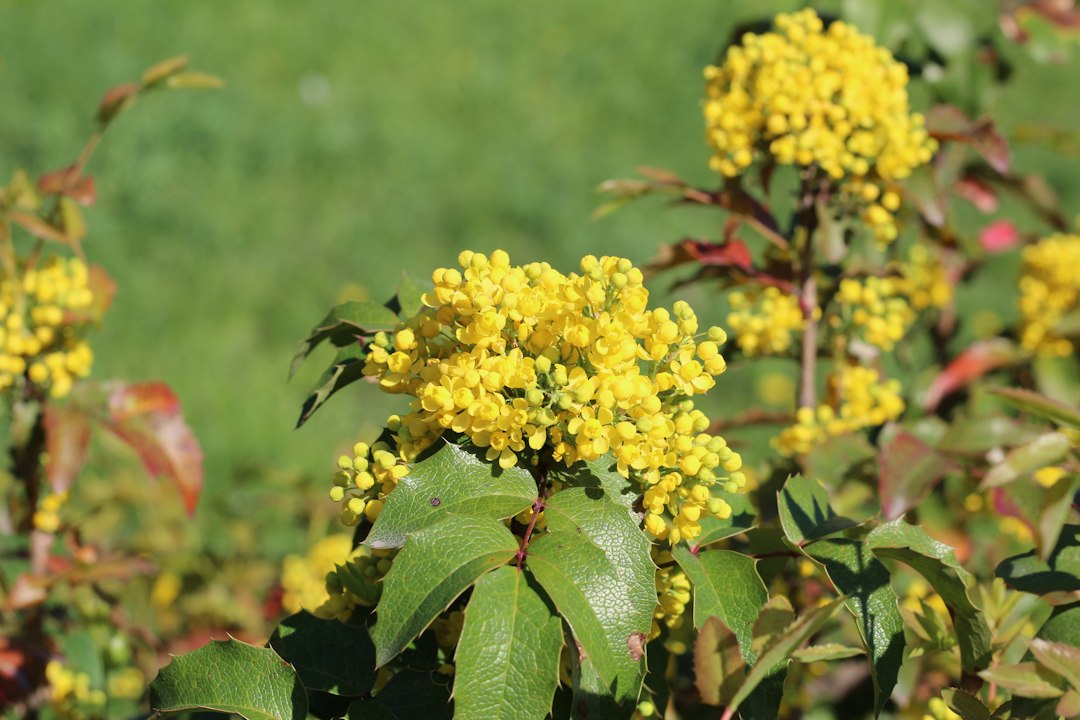
Oregon grape photo by Marina Yalanska on Unsplash.